

What is an apiary when a beekeeper says they are heading to the bee yard? An apiary is the managed location where one or more honey bee colonies and their hives are kept. The site includes more than boxes, because safe access, water, forage, and working space shape daily decisions. A well-planned apiary lets the beekeeper care for colonies without sending normal hive activity across busy paths.
A single occupied hive can form a small apiary, while a commercial site may hold many colonies. Neither land area alone nor the number of boxes tells you whether a location is suitable.
An apiary layout directs bee flight away from people while reserving room for safe colony inspections. Practical capacity depends on forage, water, local rules, colony behavior, and the beekeeper’s available time. Quick outside checks monitor the yard, while purposeful hive openings examine brood, food, and pests.
This guide explains what an apiary contains, why its layout matters, and how to judge a workable hive count. It also follows the everyday cycle of entrance checks, planned inspections, access, and records. Use those decisions to evaluate a site before placing bees, then revisit them as conditions change.
Jump to a specific section on this article
How an Apiary Differs From a Hive or Bee Colony
An apiary names a managed place, while a hive names the structure that shelters bees. A colony describes the living social group, including its queen, workers, brood, and seasonal population. One site may hold several hives, with one colony normally occupying each functioning hive. Because these terms describe different things, counting boxes alone can misrepresent how many colonies are present.
An empty hive stored beside occupied equipment does not automatically represent another established colony. A nucleus colony may occupy a smaller box but still needs regular care and monitoring. When a beekeeper moves colonies elsewhere, the apiary site can remain in use for equipment and future placement.
The distinction matters when registering apiaries, comparing health records, or arranging landowner permission. A registration authority may count colonies, sites, or hive locations using its own definitions. Check the exact wording of local requirements before reporting an apiary’s size or status.
When evaluating an apiary, understanding the fundamentals of managed beekeeping helps distinguish colony health from hive condition. A colony can swarm or fail even while its wooden hive remains standing and intact. Healthy brood and accessible food describe colony conditions, not the physical layout of the yard. Likewise, good fencing cannot replace inspections of brood health, food stores, or pests.
Use the word apiary when discussing site layout, neighbors, access, and shared equipment. Use hive when specifying a stand, box, entrance, frame arrangement, or other physical component. Use colony when describing population, queen condition, food demand, disease, and management decisions.
Apiary Uses for Honey, Pollination, and Teaching
Many apiaries support honey production, but others prioritize crop pollination, breeding, observation, or education. The purpose influences the number of colonies, equipment kept nearby, and required access. Honey-focused operations need workable routes for carrying full supers without crossing busy flight paths. Pollination sites may instead prioritize temporary placement near flowering crops and reliable vehicle access.
Teaching apiaries need a clear observation area separated from entrances and open hive work. An instructor should plan protective clothing, group size, emergency communication, and supervised movement. Visitors can watch entrance activity without standing directly where returning foragers approach.
Some beekeepers raise queens or produce nucleus colonies, so their equipment needs differ from honey operations. Dividing colonies and monitoring mating success creates additional labeling and recordkeeping demands. Education groups may favor a smaller number of accessible colonies over a crowded demonstration yard. In every case, the apiary’s purpose should dictate layout before hive numbers are chosen.
In a working apiary, the process from the first hive to the first harvest involves tasks beyond collecting honey. Foraging observations help identify flowering periods, while inspections reveal brood development and disease signs. Harvest preparation also requires clean handling arrangements that may sit away from the apiary itself.
Set one primary objective for the location, then list the work needed to support it. A second objective can follow when safety, staffing, colony care, and equipment capacity allow.
Apiary Layout Zones for Hives, Work, and Equipment
Divide an apiary into hive positions, an equipment staging area, and a clear route for people. Choose stable, drained ground where a lid can be lifted without obstructing neighboring colonies. Keep tools and spare boxes beside the working route rather than directly in front of entrances.
Arrange hive entrances so returning bees travel away from doors, paths, play areas, and livestock. Give the beekeeper a predictable approach from the side or rear of each hive. Place temporary boxes on clean, stable ground where they cannot block the escape route. When preparing a new bee yard, extension guidance on choosing an apiary location highlights drainage, access, and nearby activity.
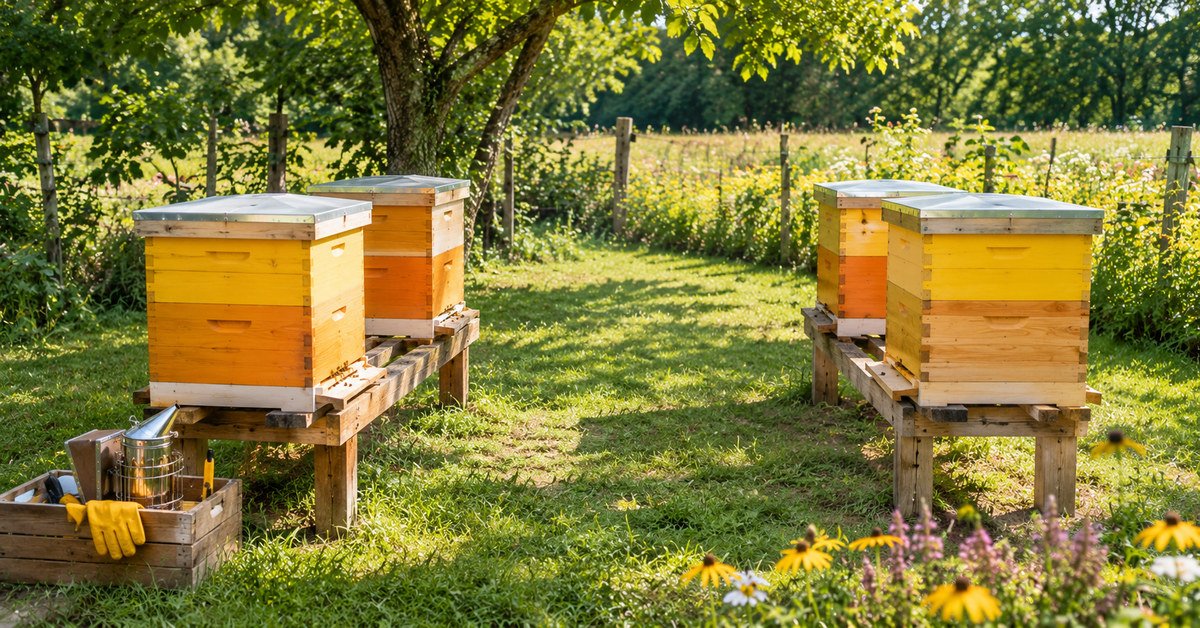
Work zones should accommodate a second person without forcing either worker into entrance traffic. During inspections, rest a VIVO BEE-V001L Large Stainless Steel Beehive Smoker on a stable, fire-safe surface away from vegetation. Keep feed containers protected against spills, animals, and access by robbing bees.
For two separate hives, sketch a gap of roughly 1 metre, or 3 feet, between their stands. Reserve a clear rear aisle before assigning space for boxes removed during an inspection. Keep the open flight corridor ahead of each entrance away from regular pedestrian movement. Test the drawing with an empty super, including a turn and a safe place to put it down.
For four hives, consider two pairs separated by a usable service path instead of one tight row. Leave level space for temporarily lifted supers without narrowing the route to either pair.
If a loaded cart cannot reach each stand after rain, improve the route before adding more hives.
Hive Spacing for Inspections and Movement Within an Apiary
The hive’s footprint is only a small part of the space required to inspect it safely. While wearing a Mann Lake ProVent Beekeeping Jacket (Large), confirm you can lift frames and turn safely behind each stand. Side gaps must also permit a turn while carrying equipment without brushing adjacent entrances. Two hives can look well spaced until removed supers and a smoker occupy the walkway.
Mark a rear aisle, side clearance, and set-down point on the ground before installing stands. Treat the approximate 1 metre gap in a two-hive sketch as a starting measurement, not a rule. Measure your actual cart and equipment because a pedestrian gap may still obstruct a loaded trip.
Hives can be grouped on shared stands when the support is level and sufficiently stable. However, a shared stand may transmit vibration while one colony is being opened. Different entrance orientations or identifiable fronts can help reduce drifting between nearby colonies.
Keep walking surfaces free of loose boards, exposed roots, and equipment that becomes slippery. Where terrain is uneven, favor a secure path over squeezing another stand into the row. Mark a temporary set-down position so opened boxes are never placed in a person’s escape route.
Plan expansion as additional working clearance rather than just another hive footprint. Review the arrangement after the first complete inspection, when movement difficulties become visible.
Before approving a layout, walk from the gate to every hive while carrying an empty super.
Apiary Flight Paths Around People and Property Boundaries
Bees travel in a concentrated stream near a hive entrance before dispersing across the landscape. Place entrances away from routine pedestrian movements, shared gates, patios, and animal feeding points. A boundary fence matters less than where the bees actually fly at head height.
If bees would cross a walkway, redirect the entrances or consider a suitable solid barrier. Observe flight activity at different times of day before selecting the barrier’s location. An incomplete hedge cannot reliably lift low-flying bees above people using the path. Keep water points, gates, and gathering areas outside the main line of incoming foragers.
Direct exposure is most concerning where children, visitors, or workers cannot avoid the flight corridor. A planted screen may take time to become dense enough to influence that corridor. Do not count a few thin branches as a dependable substitute for sensible placement.
Talk with nearby property users about water, flight direction, and the location of shared paths. If activity increases around a boundary, reassess entrances before conflict becomes routine. Handle defensive colonies promptly rather than assuming a change in fencing will solve temperament problems. Keep inspections away from crowded hours when practical, especially during difficult colony conditions.
Check local setback, fencing, registration, and nuisance requirements before installing the first hive. Requirements vary by jurisdiction and may also depend on site size or land use. Good flight-path planning protects the beekeeper’s ability to maintain the apiary over time.
Water and Forage Access Around an Apiary
An apiary needs nearby flowering resources and a dependable source of accessible, clean water. Workers gather nectar for carbohydrates and pollen to support brood nutrition and colony development. Available forage changes through flowering seasons, drought, land management, and surrounding crop choices.
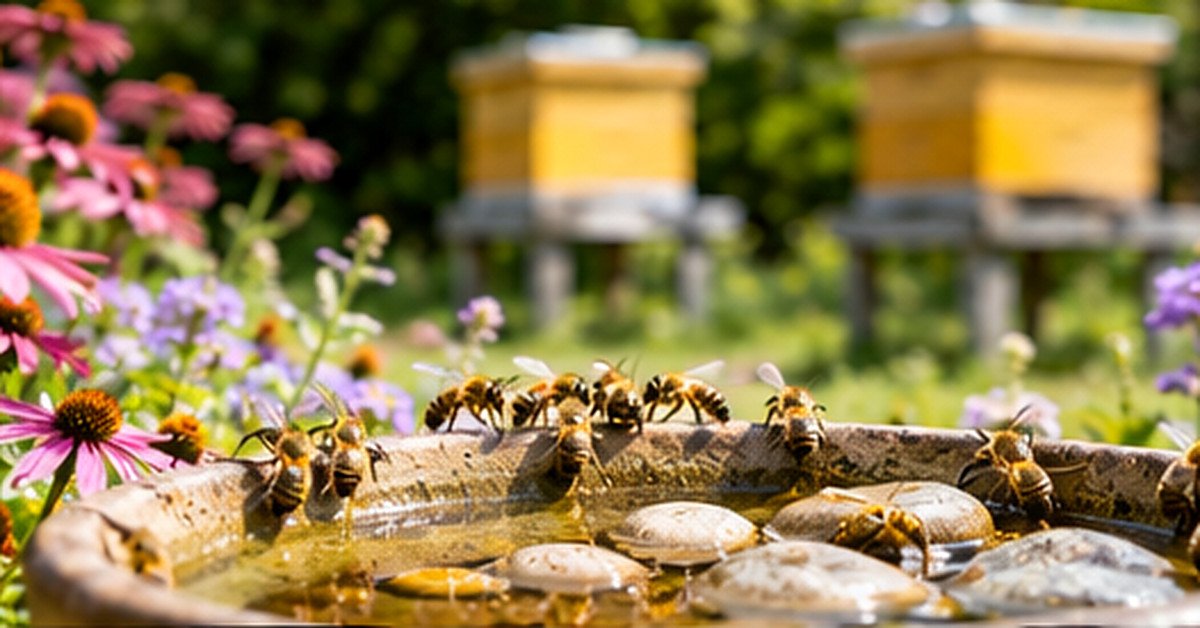
Map nearby flowering periods by month rather than judging forage from the flowers visible today. Look for gaps after crop harvest, during local dry spells, or through cold-season dormancy. Place a shallow water station with secure landing surfaces before colonies are installed. Refill and clean it during outside checks, especially when hot weather increases water demand.
Provide clean, shallow access with stones or floats so bees can land without drowning. Position the station where it does not draw flying bees across a frequently used walkway. Change and clean water containers often enough to avoid debris, standing waste, and mosquito breeding.
Four colonies place greater demands on local forage than two comparable colonies in the same season. Compare available stores and pollen intake before deciding that an existing yard can support expansion. During a prolonged dearth, assess accessible food and seek local guidance before adjusting feeding. Ask nearby land managers about pesticide applications that could expose bees beyond the property boundary.
Do not calculate carrying capacity from the apiary’s square footage alone. Foraging conditions extend beyond property boundaries and change as flowers open and finish. A water source and good flight routes are necessary planning elements, not substitutes for forage.
What Determines an Apiary’s Practical Hive Capacity
Apiary capacity has two basic limits: space to work safely and resources to support colonies. A yard may hold four physical hive stands yet provide adequate forage for fewer colonies. Inspection time, flight-path safety, water, and local restrictions can further reduce the practical count.
Suppose two colonies have safe access, dependable water, and working routes that remain clear. Before doubling to four, compare food reserves, brood growth, and forage availability across the season. Check whether four complete inspections and urgent follow-ups will fit your actual weekly schedule. Keep space for temporary splits or equipment rather than treating every empty stand as colony capacity.
For a new beekeeper, the choice of starting with one hive highlights simpler management but fewer comparisons. A second colony can provide useful comparisons, provided each receives adequate care and resources. Two neglected colonies are not a safer plan than one well-managed colony with local support.
After a forage shortage, review whether colonies lost weight or required substantial supplemental feeding. If several repeatedly run low on stores, delay expansion despite unused space for more stands. Ask experienced local beekeepers about nearby yards, disease concerns, and seasonal flowering changes. A strong nectar flow in one season does not establish that the site can support permanent growth.
Let a full season of records show how many colonies you can monitor and support reliably. Expand only when forage, work space, travel time, and backup help all remain adequate.
Access Routes for Moving Hives and Apiary Equipment
Apiary access should remain usable when full boxes, replacement equipment, or colonies need moving. A narrow garden gate may admit a person but prevent safe passage with loaded equipment. Test the route from storage or vehicle parking all the way to the hive stands.
Identify muddy sections, steep slopes, low branches, loose stones, and awkward turning points. Use a route wide enough for the actual cart or carrying method you intend to use. On distant sites, consider emergency access after rain and the likelihood of blocked tracks. Avoid a layout that requires lifting heavy supers across drainage channels or fences.
Vehicle access is valuable for larger operations but should not create a hazard near entrances. Keep unloading areas separate from the main flight corridor and visitor approach. A covered staging point can protect tools briefly during sudden rain without enclosing bees.
Moving occupied hives requires secure closures, ventilation, and planning for the journey and destination. Transport timing should account for flight activity, weather, local regulations, and potential overheating. Never move an occupied colony merely because a trolley fits between existing stands.
Write down any access conditions agreed with a landowner before equipment arrives. Good access arrangements make routine work and urgent colony management more predictable.
Routine Apiary Checks and Planned Hive Inspections
Daily purpose does not mean opening hives every day; most frequent observations happen outside. When visiting, scan entrances, water, covers, stands, access paths, and protective fencing. Flag heavy fighting, unusual numbers of dead bees, toppled equipment, or blocked entrances for follow-up. Check damage promptly after storms or other incidents rather than waiting for the next planned inspection.
During active colony growth, schedule purposeful inspections of brood, food, space, and pests. A ten-day to two-week interval is a useful starting point for many active colonies, with local adjustments. Newly installed colonies, swarming concerns, and suspected illness may justify earlier targeted checks.
When planning inspections, budget the hours required across a typical year around busy seasons rather than quiet weeks. At each opening, note brood development, available food, unused comb space, and documented pest monitoring. Follow up sooner when a specific finding suggests disease, queen trouble, or food shortage. Close the hive once the inspection question has been answered, without prolonging disturbance unnecessarily.
After strong wind or heavy rain, check lids, straps, stand stability, and water before disturbing bees. Persistent robbing or unusual mortality calls for targeted assessment outside the regular inspection timetable. Record the evidence first, then decide whether an immediate full inspection is safe and useful.
Outside checks establish whether the apiary remains safe, accessible, and supplied with water. Open-hive inspections establish whether colonies have adequate brood, nutrition, room, and monitored pest levels. Record the next action and date so each visit builds logically on the previous findings.
Observing Hive Entrances and Apiary Conditions
Watch each entrance from the side briefly before deciding whether that hive needs opening. Compare pollen arrivals, traffic, fighting, and dead bees with observations made on earlier visits. Use another colony for comparison only when its strength and exposure make that comparison meaningful. Notice whether nearby paths or water stations draw people into incoming bees’ flight lines.
A busy entrance cannot confirm healthy brood, a laying queen, or acceptable mite levels inside the hive.
Rain, cold mornings, or a gap in flowering may reduce traffic without indicating colony failure.
On the same circuit, check water, hive covers, fencing, and the ground beneath each stand. Correct a loose lid or damaged barrier before beginning work that could further disturb bees. Record specific damage and its location so you can confirm the repair at the next visit.
Checking Brood and Food During Apiary Hive Inspections
Begin an open-hive inspection with four questions about brood, food, space, and pest pressure. Look for eggs and young larvae as evidence of recent laying without always finding the queen. Check stored pollen and honey near the occupied frames rather than relying only on box weight. When mite monitoring is due, record the sampling method, sample size, and actual count.
Prepare a clean frame rest and keep a Little Giant BKBR14 14-inch Beekeeping Brush available when gently clearing bees from frames. Keep removed frames above the hive when practical so dropped bees return to their colony. Use a suitable hive tool gently to separate propolis seals and avoid crushing bees against equipment.
Brood gaps can reflect queen transitions, nutrition problems, or disease, so compare several frames. Write down visible findings rather than diagnosing an infection from appearance alone. If stores look low, consider the colony’s actual food access and local forage conditions. Record mite sample sizes and counts consistently so results can be compared over later inspections.
Close the hive when the planned questions are answered, replacing frames and covers carefully. Record any action taken, outstanding concern, and the intended follow-up date before leaving. Clean or separate shared equipment appropriately when suspected disease creates a transmission concern.
Hive Labels and Records That Keep an Apiary Organized
Give the site and each occupied hive different identifiers, such as Yard A and Hive Two. Repeat those identifiers on inspection sheets, treatment records, and every colony movement note. Place labels where they remain legible without obstructing flight, ventilation, or equipment handling. Mark spare equipment separately so a removed box is not mistaken for an occupied colony.
Record the visit date, weather, hive identifier, observation, action completed, and next check. Keep measured mite counts and hive weights distinct from estimates of population or strength. A clear follow-up reminder reduces the chance of forgetting a food shortage or queen concern.
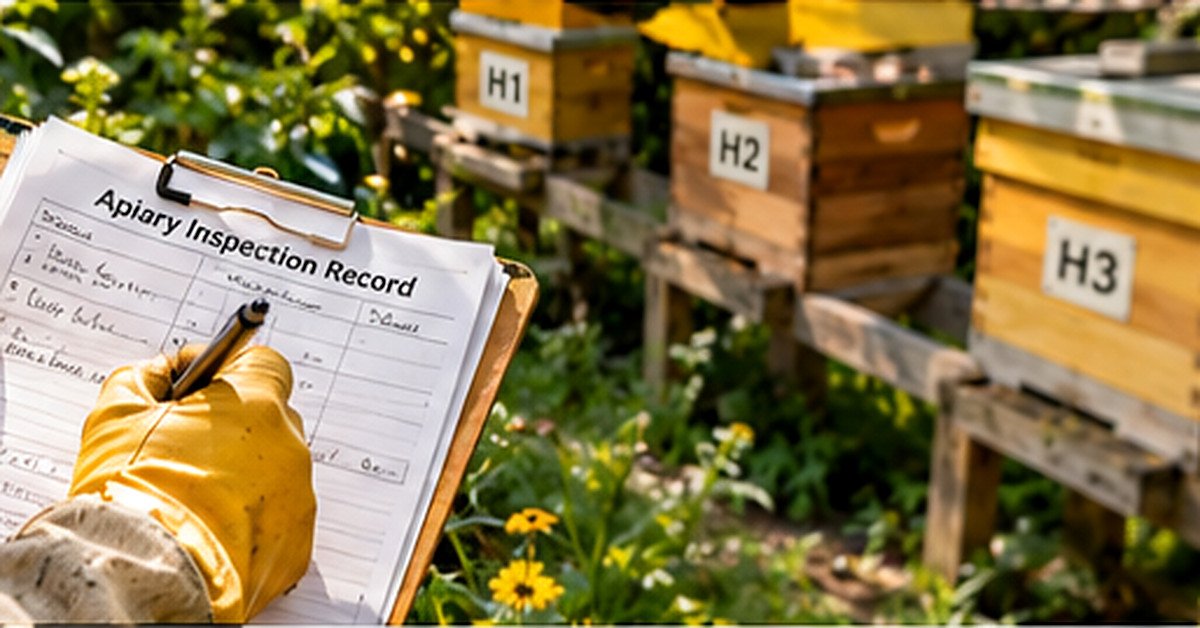
A simple notebook works when it is carried regularly and protected from moisture. Digital records help when several people share updates or colonies are moved between sites. Whichever format you choose, keep the history attached to the correct colony identifier.
Date hive movements so you can distinguish relocation effects from ordinary colony changes. Keep a record of shared tools and equipment when biosecurity concerns require follow-up. A clear action list helps the next visit address unfinished management tasks.
Photographs can supplement written records when they show a specific finding accurately. Do not substitute a distant entrance image for a documented brood inspection. Review patterns across inspections rather than reacting to a single ordinary variation. As capacity grows, consistent labels prevent confusion more effectively than extra paperwork alone.
A useful apiary record makes the next management decision easier to verify and carry out.
Frequently Asked Questions about Apiaries
Can an apiary move between locations during the year?
Yes, some apiaries operate seasonally, with colonies moved between flowering areas or pollination sites. Moving an occupied hive requires a secure box, adequate ventilation, and a suitable receiving location. Travel conditions, local movement rules, and disease restrictions must be checked before colonies are loaded. The new site should already have stands, water access, and a workable flight direction.
Keep a record of which colonies moved, the dates, and the destination identifier. Transport may alter foraging patterns while bees learn the new surroundings. Inspect equipment security after arrival without unnecessarily opening stressed colonies.
A stationary home apiary can also support colonies that return after temporary pollination work. Seasonal movement increases handling work and exposes access problems that permanent yards may hide. Plan the entire route and unloading sequence before treating migration as an easy expansion method.
Can several beekeepers share one apiary?
Yes, shared apiaries can work when responsibilities are explicit and the site has enough safe working space. Agree who owns each colony, who performs inspections, and how records are stored. Separate equipment where practical to reduce mistaken transfers between colonies and owners. Set rules for visitors, access times, hive movements, and responding to potential disease. Confirm that the arrangement satisfies landowner permission, insurance obligations, and local registration requirements.
What should I agree with a landowner before establishing an apiary?
Agree on the exact hive area, access route, permitted colony count, and responsibility for upkeep. Discuss water supply, pesticide notification, livestock movements, visitor access, and how concerns will be reported. Specify when vehicles may enter and what happens if the landowner changes property use. A written agreement reduces uncertainty when either party needs to move or reduce colonies.
Conditions may shift during the first beekeeping season as forage, weather, and management needs change. Make arrangements for retrieving equipment promptly if permission ends or the location becomes unsafe. Check applicable registration and zoning rules separately from the landowner’s permission.
Can an apiary contain different hive designs?
Yes, one apiary can contain Langstroth, top-bar, or other managed hive designs together. Different designs need different inspection clearances, stand supports, and frame handling procedures. Comb and frame compatibility cannot be assumed merely because the hives stand beside each other. Label equipment clearly when several systems are used within the same site.
A top-bar hive may require longer side access than a compact vertical stack. Box-lifting arrangements for stacked hives may require additional stable ground and set-down space. Transport and harvest workflows should account for how each design is opened and closed.
Mixed designs can be useful for teaching when the instructor can manage each one competently. Visitors need clear explanations that housing design does not automatically reveal colony health. Choose each design for a practical management purpose rather than variety alone.
Can an apiary share space with grazing livestock?
Yes, some sites combine beehives with grazing, but the animals must not reach or disturb hives. Use secure fencing, stands, and gates appropriate to the livestock species and terrain. Cattle and horses may rub against supports or push through light barriers. Feed and water points should not force livestock through bee flight paths. Consider how animals react to stings and how workers can leave the enclosure safely.
Talk with the livestock manager before moving either animals or colonies closer together. Inspect barriers after storms, fencing maintenance, and changes in stocking arrangements. If safe separation cannot be maintained, choose another hive location instead.
Can visitors enter an apiary without opening hives?
Yes, visitors can observe an apiary from a planned area without opening colonies. Keep observers away from entrance corridors, working equipment, and locations with frequent bee traffic. Give a short briefing about calm movements, protective clothing, and the route back. An experienced supervisor should monitor conditions and end the visit if bees become defensive.
Use a clear boundary to distinguish the observation zone from the active work zone. A viewing point should remain accessible without walking between closely spaced entrances. Plan group size around the actual available room rather than the entire property’s size.
Children and inexperienced guests need closer supervision than familiar workers. Avoid demonstrations during heavy robbing, unusually defensive behavior, or severe weather. Visitors should know how to report a sting or suspected allergic reaction promptly.
Education works best when the visitor route never interferes with normal colony care.
Can diseases spread between neighboring apiaries?
Yes, honey bee pathogens and pests can spread through drifting, robbing, moved colonies, and contaminated equipment. Risk varies with the organism, local colony density, and management practices. Avoid exchanging brood comb or used equipment between suspect colonies without appropriate disease precautions. Keep accurate inspection records and consult local bee-health authorities when regulated diseases are suspected.
Does an apiary need a dedicated honey extraction room?
No, the apiary itself does not necessarily need a dedicated room for honey extraction. Honey handling is often better separated from open hives, flying bees, and outdoor contamination. A suitable food-handling space should be cleanable and protected from pests. Commercial processing may involve additional hygiene, premises, or licensing requirements in the local jurisdiction.
Plan how full supers will travel from the yard to the handling location. Keep equipment and containers arranged so bees cannot enter exposed honey during transport. Do not assume that a covered outdoor table meets every food-safety requirement.
Can one beekeeper manage more than one apiary?
Yes, one beekeeper may manage several apiaries when travel and colony care remain manageable. Separate locations can provide access to different forage areas or accommodate small land parcels. Every additional site adds travel, access planning, records, and opportunities for missed inspections. Keep emergency contact information and site identifiers available to anyone helping with maintenance.
Cluster scheduled visits sensibly without ignoring colonies that need earlier attention. Carry suitable clean tools, spare equipment, and site-specific records for each location. Maintain permission and registration information for every site rather than only the home yard.
Poor weather may block a distant site just when a colony needs attention. Consider that risk before adding locations beyond your routine travel range. A smaller number of well-serviced yards is easier to manage than scattered neglected colonies.
Is a bee hotel for solitary bees the same as an apiary?
No, a bee hotel usually provides nesting cavities for solitary bees rather than housing managed honey bee colonies. Most solitary bee species do not organize into large, perennial honey bee colonies. A hotel therefore does not require the same hive inspections, honey handling, or colony equipment. It still needs appropriate placement, cleaning practices, and protection from excess moisture.
Solitary bee nesting materials serve a different biological purpose from removable honey bee frames. Some bees nest in soil rather than hollow stems or drilled blocks. Habitat improvements should reflect the local species rather than assume every bee uses a hotel.
An apiary may coexist with nesting habitat when enough forage and safe space are available. Managing honey bees does not by itself conserve every native pollinator species. Consider planting diverse flowering resources and protecting existing nesting sites around the property.
Use the term apiary for managed bee-colony sites and describe solitary-bee housing by its actual function.
A Few Last Things to Know About Apiaries
An apiary is the managed site where beekeepers keep colonies and organize their daily work. Safe layout means clear flight corridors, accessible stands, clean water, and room to move equipment. Capacity follows observed forage and management ability, not simply the number of boxes that fit.
Before installing bees, sketch two hive positions, mark walking routes, and confirm local permissions. During visits, check the yard from outside and open colonies only for a planned inspection purpose. Use seasonal records to decide whether the site can responsibly support more colonies.