
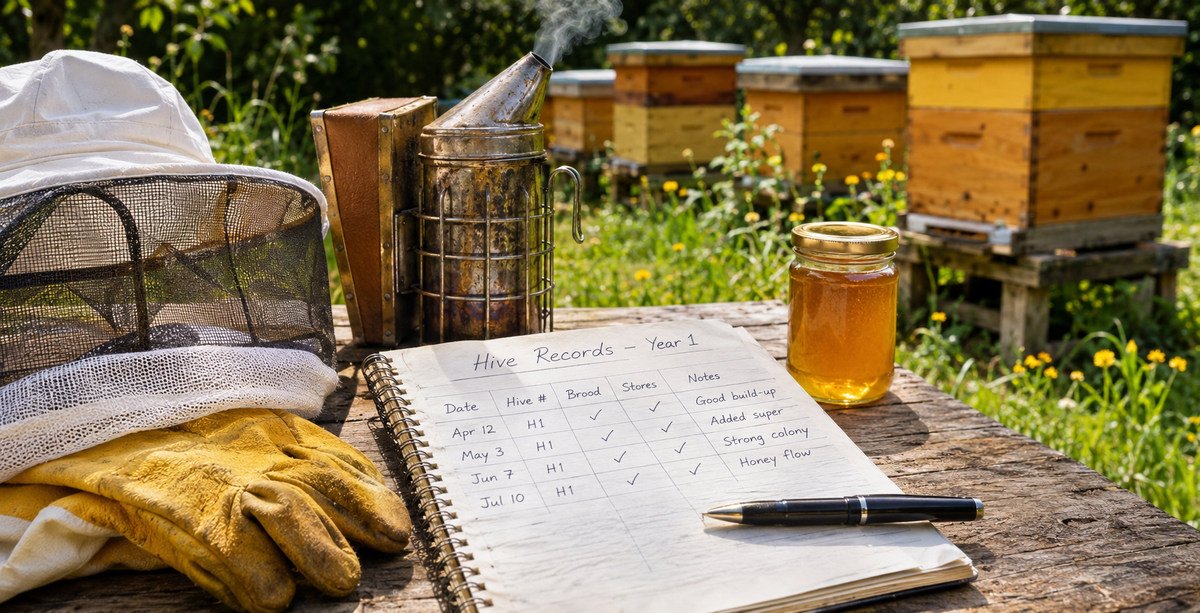
First year beekeeping records turn scattered hive observations into decisions you can revisit with confidence. Start by assigning each colony an identity and recording its source and installation date. After every inspection, note brood, food, space, pests, and the next action required. Those details help separate normal seasonal changes from problems that need attention.
Begin with eight core fields: date, hive ID, inspection type, queen evidence, brood, stores, health signs, and next action. Add weather, forage, photographs, and time spent when useful, but always record sampling, feeding, treatments, and equipment changes.
Write “not inspected” when you did not check a category, instead of recording “none seen”. Record direct observations separately from guesses, photographs, or advice received after the visit. Follow each intervention with an assigned task so later entries can show what actually changed.
Use one repeatable template for all colonies, even when managing a single hive. Compare entries at sensible intervals instead of judging a colony from one unusual inspection. Keep treatment and legal records in the format your local authority requires.
Jump to a specific section on this article
Record Hive Identity, Bee Source, and Installation Details
Give every colony a short permanent identifier before the first bees arrive at your apiary. Write the identifier on its hive, record sheet, and any storage folder. Also record the apiary location and the position of the hive within it. This prevents notes from becoming detached when equipment or colonies change locations.
Record whether the bees arrived as a package, nucleus colony, swarm, or established colony. Add the supplier, collection date, installation date, and known queen origin. Unknown source details should remain marked unknown rather than guessed later.
An initial equipment list should identify hive format, brood boxes, frames, and foundation types. A clear first-year setup plan can help connect equipment choices with the colony’s starting conditions. Retain delivery paperwork and inspection certificates wherever applicable to your local rules.
Keep the original colony ID when a queen is replaced, but record the replacement date. Assign a new ID to each independent colony created by a split. Link parent and daughter records so their shared history remains discoverable. When relocating a hive, record both its former and current apiary positions.
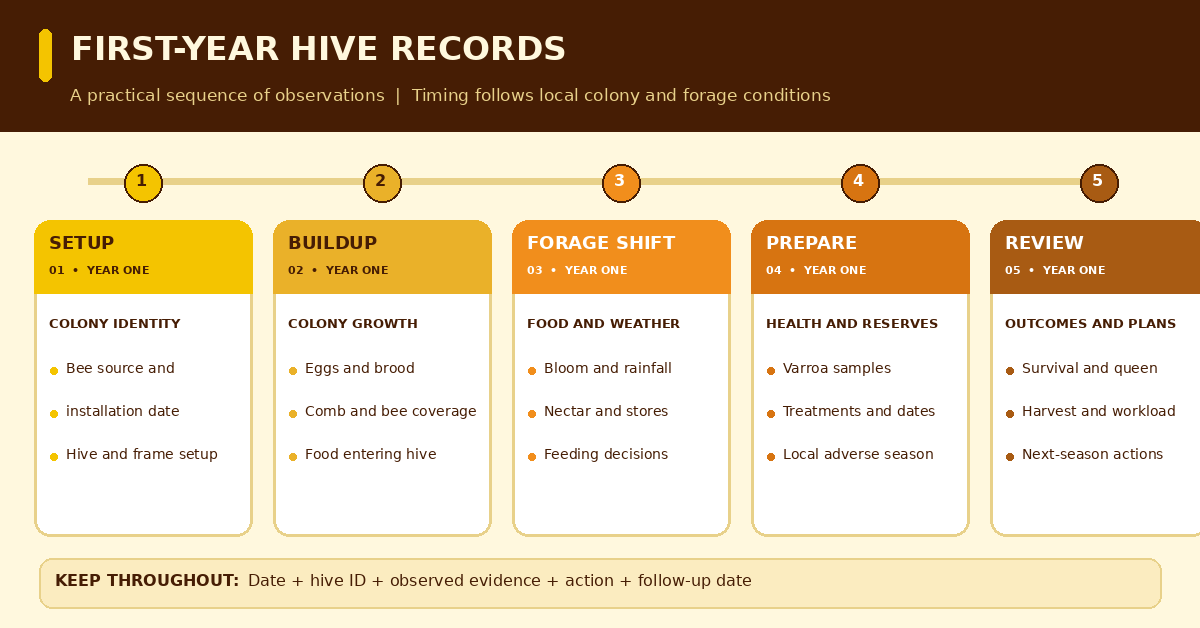
Keep one permanent hive profile with the colony ID, bee source, and equipment format. For each inspection, use this order: date, inspector, queen evidence, brood, stores, pests, work, and next action. Add separate dated entries for feeding, Varroa samples, treatments, and equipment movements.
Log Inspection Dates, Weather, and Local Forage
Every inspection record should begin with the date, approximate time, hive ID, and beekeeper. Note whether the colony was fully opened or only checked externally. Record rain, wind, temperature, and unusual conditions when you can observe them reliably. These details explain why a visit was shortened or a hive behaved differently.
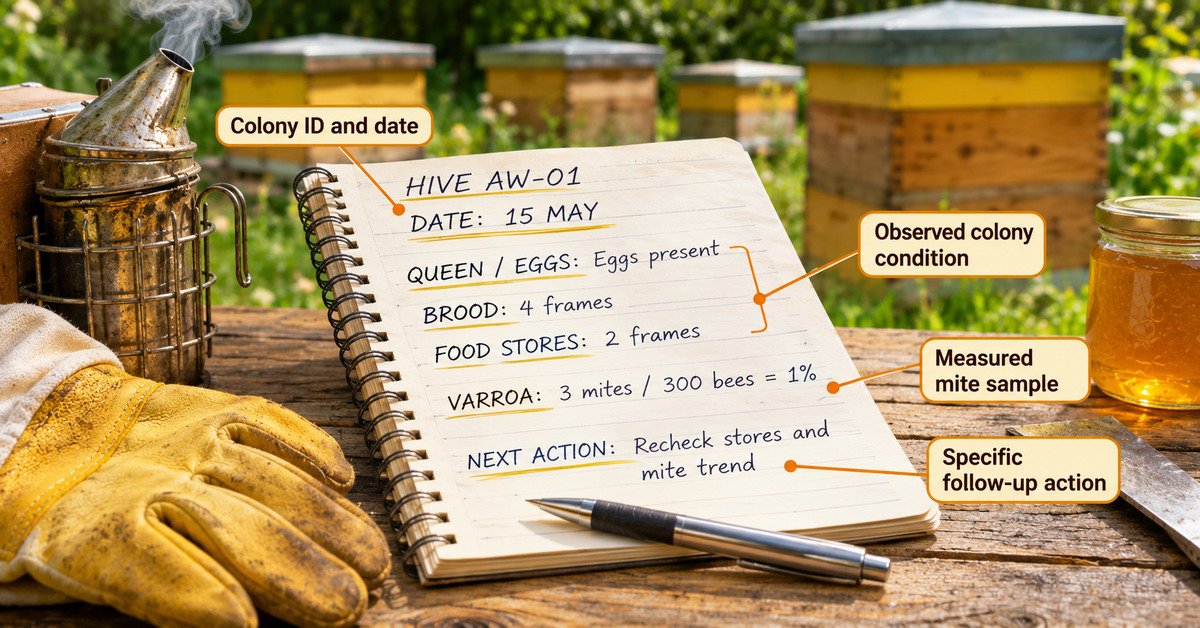
For illustration, an entry might read: 15 May, hive AW-01, calm weather, eggs present, four brood frames. Food on two frames; an alcohol wash found three mites from approximately 300 workers, about 1% in that sample. Next action: compare the result with local Varroa guidance, inspect stores again, and schedule a dated follow-up.
Note flowering plants that bees appear to visit and whether nectar is entering the colony. Record a forage gap when few blooms are visible, without assuming the entire area lacks food. Comparing entries against seasonal colony changes helps reveal patterns tied to local flowering. When rainfall drives your area’s seasons, describe wet and dry periods instead of imported calendar labels.
For documenting storage conditions, the ThermoPro TP50 Indoor Thermometer and Humidity Gauge measures ambient temperature and humidity in a sheltered room. Its indoor specification means it should not be treated as a weatherproof apiary sensor. Keep room measurements separate from direct observations of outdoor forage and hive activity.
When rain prevents opening the hive, record “entrance observation only” and mark brood condition “not inspected”. Set the next suitable check date rather than treating the missing brood observation as a normal result.
Record Queen Evidence, Eggs, and Brood Pattern Changes
For each brood inspection, distinguish seeing the queen from finding recent evidence of laying. Note eggs, young larvae, capped worker brood, and any drone brood. A queen unseen during a visit does not automatically mean the colony is queenless.
Describe brood distribution across the inspected combs rather than assigning an unsupported health score. Record patchy areas, empty cells, damaged cappings, or unusual odors with their locations. Brood gaps can reflect several causes, including age, stores, chilling, or disease. Take uncertain findings to a qualified mentor or inspector before treating them as a diagnosis.
A brief note about brood and foraging roles gives context for why visible colony activity changes over time. Count the frames showing brood when that is practical and consistent. Keep separate fields for eggs present, queen seen, and queen cells observed.
When queen cells appear, record their location, approximate number, and development stage. Distinguish an open cup from a charged cell containing larva and royal jelly. Note any change in queen status following swarming, splitting, or replacement. Avoid destroying cells solely because a first inspection makes their meaning uncertain.
Review laying evidence alongside the colony’s population and recent weather records. Compare several visits before drawing conclusions from a single unusual brood pattern.
A dated photograph can supplement the description when it preserves a clear view of the same comb area.
Track Population Strength, Comb Development, and Space
Estimate colony strength using the same frame-counting method at each inspection. Write adult-bee coverage and brood coverage as separate fields instead of combining them into one impression. For instance, “six frames with bees, four with brood” is more useful than “colony strong”. State whether you counted individual frame faces or whole frames, and keep that convention consistent.
Check whether outer frames contain bees, stores, or unused foundation before adding equipment. A crowded brood nest has different implications from an empty box above it. Note hive volume changes and why you made them.
For one colony, single-hive management makes consistent observations especially useful because there is no neighboring hive for comparison. Mark expansion decisions against measured occupancy rather than a fixed calendar date. Keep queen-excluder and super positions in the equipment history when used.
Describe comb color and straightness where these affect future inspections or extraction. Record damaged frames, burr comb, or irregular foundation as maintenance issues. A rough estimate is useful if the same method is used consistently.
Before the next visit, identify which box or frame needs another check. That action is more informative than writing only that the colony looked busy.
Photograph the overall frame arrangement before a major rearrangement if rebuilding the original order might become difficult.
Log Food Stores, Feeding Methods, and Feed Amounts
Estimate the locations of nectar, capped honey, and pollen on the inspected frames. During establishment, watch whether stores and newly drawn comb keep pace with developing brood. Write “not checked” for unseen stores instead of assuming full food availability.
For every feeding, record the date, feeder type, and amount supplied. Identify whether the feed was syrup, fondant, or another preparation appropriate to the colony. For syrup, include the recipe and whether proportions were measured by weight or volume. Log the amount remaining or consumed at the next check when observable.
Record why feeding began, such as installation support or a confirmed shortage of stores. Note any leaking feeder, robbing pressure, or bees drowning in exposed syrup. A feeding note without its reason cannot explain later management choices.
Distinguish feed placed for colony survival from nectar intended for harvestable honey. Record when honey supers were installed and when feeding stopped. Follow local guidance on supplemental feeding and avoid harvesting syrup-contaminated comb. Where forage returns, explain why a feeder was removed or retained.
Early after installation, compare feeder use and comb growth with the number of brood frames. During nectar gaps, record whether visible stores are being consumed while forage slows. Before the local dearth or cold season, assess stored food alongside population and mite results.
Track Disease Signs, Varroa Monitoring, and Treatments
Maintain a separate health record within each colony’s chronological inspection notes. Describe observed symptoms precisely, including affected brood, adult bees, or comb. Keep suspected causes distinct from findings confirmed through sampling or diagnosis.
Record deformities, crawling bees, unusual brood cappings, and visible pests only when actually observed. Do not assume that absent visible mites means a low Varroa burden. Sampling results are more informative than visual inspection alone for monitoring Varroa on adult bees. Preserve photographs and specimen details when an inspector requests them.
Keep the sampling method and approximate number of bees consistent when interpreting changes over time. Record raw mites, estimated bees sampled, sample date, colony ID, and calculated percentage together. Where monitoring methods differ, avoid claiming a change in infestation solely from the percentages.
For treatment, document the product’s exact name, active ingredient, application date, and removal date. Record dosage or strip count as required by the registered label for your region. Include brood conditions, ambient temperature restrictions, and whether honey supers were present. Follow the current label instead of copying another beekeeper’s schedule.
Book a follow-up mite assessment while the treatment details are still available. A declining count only becomes interpretable when the methods and dates are recorded. Escalate suspected reportable diseases through your local bee-health authority promptly.
Record Varroa Samples, Counts, and Infestation Rates
Use a repeatable test that estimates mites on sampled adult bees rather than merely noting visible mites. For comparable results, Penn State Extension’s alcohol wash monitoring guidance describes sampling roughly 300 worker bees. Confirm the queen is absent from the sample before collecting bees. Record the technique, number sampled, mites found, and date in the same field.
For a 300-bee sample, three recovered mites correspond to roughly 1% of sampled adult bees.
Keep raw counts alongside calculated percentages because approximate bee volumes can change the denominator.
A test percentage describes mites recovered from that adult-bee sample, not an exact whole-colony burden. Interpret it against local guidance, brood conditions, and the current part of your season. Schedule follow-up sampling with a comparable method to assess the effect of management decisions.
Log Treatment Dates, Products, and Follow-Up Testing
A treatment record should identify the affected hive and the exact registered product used. Enter active ingredient, dose, batch or lot when available, and dates of application and removal. Document relevant label conditions such as air temperature and honey-super restrictions. If several colonies received treatment, give each colony its own entry.
Set the next testing date according to the product label and local extension guidance. Record problems during application rather than hiding deviations from the intended method. A missing removal date can complicate future safety and compliance checks.
Follow-up sampling should specify the same information captured before treatment. Compare counts only when the sampling method and approximate sample size are compatible. If levels remain concerning, consult local guidance before repeating or changing chemicals. Keep the original result visible, even when the treatment outcome is disappointing.
Record biological management steps, including brood interruption, separately from chemical treatment. Note what was done, why it was chosen, and how it was evaluated. Accurate histories support rotation planning and discussions about resistance risk.
Document Box Changes, Swarms, Splits, and Hive Moves
Treat every significant change to colony structure as an event with a date and reason. Record boxes added or removed, frame transfers, and adjustments to entrances or feeders. Equipment history can explain later changes in space, stores, or brood placement.
If a colony swarms, write down when the event was seen or first suspected. Note whether a swarm was recovered and how its identity was tracked. For a split, document the parent colony and the frames or resources transferred. Record queen status for both colonies without assuming successful mating before evidence appears.
A relocated hive needs a record of its former and new site. Include the move date, travel conditions where known, and observed settling behavior. Confirm local movement rules and any necessary disease paperwork before relocation.
Document frame transfers between hives with both source and destination identifiers. Record why a comb was moved and whether brood or food was present. Avoid moving suspect disease material while a diagnosis remains unresolved. The next inspection should test the intended purpose of the change.
At season's end, review these events against colony development and survival. Structural changes often explain trends that ordinary inspection notes miss.
Track Beekeeping Work, Equipment Use, and First Harvest Results
Time records show how much attention each colony actually required during the first year. Log inspection duration, travel, cleaning, repairs, and feeding work separately when possible. This allows useful comparisons without turning every visit into an accounting exercise.
When reviewing weekly beekeeping workload, compare quick external checks with complete brood inspections. Record the tools used for major interventions and whether anything needed repair. Identify borrowed equipment so it can be returned or cleaned appropriately. A practical inventory reduces misplaced tools and repeated preparation before visits.
For any harvest, record the date, hive ID, and which supers supplied the crop. Weigh extracted honey only when using a consistent container and scale method. Mark any uncertain yield estimate clearly instead of presenting it as measured.
Distinguish honey removed for extraction from food deliberately left with the bees. Record frame condition, capping observations, and any moisture measurement used to assess ripeness. The first-year journal should record zero harvest accurately when colony needs prevented removal.
Keeping work and yield notes together helps you understand your own management demands. Never use harvest volume alone as a measure of overall colony health.
Record Winter Preparation and Colony Survival Outcomes
Before the local adverse season, record colony population, accessible food stores, and recent mite-monitoring results. In cold climates, include winter ventilation and moisture controls where those practices apply. In warmer regions, document the timing and severity of rainy periods or nectar dearths. Use the local forage calendar to set your preparation date rather than copying temperate winter dates.
Document entrance changes, mouse guards, wind protection, and ventilation adjustments when used. Record the date and reason for every equipment change. Keep measured colony weights or repeatable hefting assessments in a distinct field.
External winter checks should state whether flights occurred, whether the entrance was clear, and whether disturbance was necessary. Note weather conditions that make opening the colony unsafe or unhelpful. A quiet entrance during cold weather alone cannot establish colony death. Inspect fully only when temperatures and local guidance make the intervention appropriate.
At the next active season, record whether the queenright colony survived and resumed brood rearing. Distinguish a surviving weak colony from one with sufficient population for rapid expansion. Document losses with the observed evidence rather than assigning an unsupported single cause.
Preserve the final healthy observation date and first confirmed loss date for each colony. These dates help a mentor narrow the period when a problem could have developed. At the year-end review, compare food stores, queen evidence, mite tests, and seasonal weather before proposing a cause.
Add Follow-Up Actions and Review First Year Beekeeping Records
Finish every dated inspection with one clearly assigned next action and a target date. Mark urgent disease, severe food shortage, or unexpected queen loss concerns separately from ordinary maintenance. Write which evidence would trigger the action, including a repeat mite sample or a measurable drop in stores. If no action is needed, write "monitor" and set the next observation date.
Keep unresolved questions visible until evidence answers them. Replace an old guess with a dated clarification rather than silently rewriting history. If advice changes your plan, attribute it to the mentor, inspector, or source consulted.
For handling printed forms, the Amazon Basics Black Plastic Storage Clipboard, 2-Pack keeps working notes together during field visits. Store clean and contaminated items separately when disease precautions require it. Transfer field notes into the permanent record before details fade.
At each monthly review, compare brood-frame estimates with the colony's previous recorded inspection. Check whether stores are rising or falling and whether Varroa sampling methods remain comparable. Flag missing follow-up dates and unresolved health observations before planning the next visit.
Close the season by listing the installation date, strongest buildup period, major colony events, and survival outcome. Identify interventions followed by measurable changes without claiming the interventions alone caused those changes. Choose one management practice to retain and one to revise the following season. Keep original measurements and dates available behind that short summary.
Begin the second year with the same hive IDs and a fresh, dated inspection entry.
Frequently Asked Questions about First Year Beekeeping Records
Should I use a notebook, spreadsheet, or app for first-year beekeeping records?
Use the format you can update consistently after every hive visit. A paper notebook works without charging or connectivity, while spreadsheets simplify sorting and comparison. An app can combine photographs and reminders, but export options should be checked first. Your hive ID, dates, observations, and action items matter more than the platform.
Begin with a simple template before adding complex calculations. Use one record per colony per inspection and keep event notes attached to that date. Avoid scattering observations across several systems with no common identifier.
If working outdoors, keep a reliable pen and protected paper available for immediate notes. The Rite in the Rain 97-2 All-Weather Metal Clicker Pen, Black Ink, 2-Pack is designed for writing in damp conditions. Transfer those observations into a searchable archive whenever you return from the apiary.
How soon after a hive inspection should I write my notes?
Write core notes while the inspection is fresh, ideally before you leave the apiary. Begin with hive ID, inspection type, eggs or queen evidence, brood, stores, and pests. Record each intervention and its follow-up date before you start another colony. Attach photographs or recordings only when they include the correct hive identity. Later transcription is acceptable if you preserve the original observation date and separate later interpretations.
Do I need records if I manage only one hive?
Yes, even one hive changes enough through the season to make memory unreliable. A dated log can reveal when brood, forage, and mite pressure changed. It also captures feedings, equipment adjustments, and reasons for each intervention. One consistent record is easier to maintain than trying to reconstruct events months later.
Keep the same hive ID even after replacing its queen. Record any swarm or split as a linked event. An unchanged colony count does not mean its management history is simple.
What should I write when I cannot identify something in a hive?
Describe exactly what you saw and mark its identity as uncertain. Record the frame location, color, shape, movement, odor, and surrounding brood conditions. Avoid assigning a disease name based solely on a photograph or brief glimpse. Note whether the finding requires prompt expert advice or a later comparison.
Photographs can help a mentor interpret an unfamiliar structure. Keep the original image date and hive ID with the picture. Do not manipulate the colony solely to obtain a better image when doing so adds risk.
At the next visit, record whether the feature persisted or changed. If a diagnosis is confirmed, add the date and person or laboratory providing it. Preserve the earlier uncertainty so the record reflects how the evidence developed.
Can hive photos or voice recordings replace written inspection notes?
No, photographs and recordings work best as supplements to a short written log. Images can capture brood pattern, box arrangement, and unusual objects that prose cannot describe fully. Voice notes can preserve observations when gloves make typing awkward. Both formats can lose their meaning if the colony and date are missing. Write a brief summary identifying the most important observation and intended next action.
Store original files with consistent names tied to the hive ID. Keep sensitive location details out of shared files when needed. Review captions and recordings before deleting temporary copies or changing devices.
What should I do about gaps in my first-year hive records?
Leave the missing period visible instead of inventing inspection dates or findings. Label the next entry with the date you actually observed the colony. Record whether travel, weather, illness, or another constraint prevented checking it. Explain any interventions performed during the gap if reliable receipts or messages document them.
A long interval can limit conclusions about when a problem began. Avoid stating that the colony remained healthy throughout an unobserved period. Resume consistent monitoring using the same fields as before.
If an old photograph has trustworthy date information, attach it as supporting evidence. Separate retrospective reconstruction from notes written at the time. You can still learn from an incomplete season without pretending the history is continuous.
Make the next inspection plan explicit so another avoidable gap is less likely.
What is the easiest way to back up first-year beekeeping records?
Keep one primary archive and a separate copy that updates regularly. A scanned notebook or exported spreadsheet works when filenames preserve dates and hive IDs. Check that photographs and attachments remain accessible from the backup. Test opening several older entries before trusting the system for another season.
How can two beekeepers keep consistent records for the same hive?
Agree on identical hive IDs, inspection fields, and observation terms before taking turns. Have each beekeeper enter their name and the actual date of work. Use measured counts where available, and label rough impressions as estimates. Preserve disagreements as observations until a later inspection clarifies them.
Share one live record or reconcile two notebooks after each visit. Avoid overwriting an earlier entry when a second person interprets evidence differently. Use assigned follow-up owners so important actions are not duplicated or forgotten.
Which records should I share with a bee inspector or mentor?
Share the colony identity, recent inspection dates, symptoms, and relevant hive history. Include Varroa sample counts, methods, treatment products, doses, and follow-up results where applicable. Provide clear photographs only when they help explain the observed problem. Tell the reviewer which information is uncertain or missing.
For a suspected reportable disease, contact the relevant local authority promptly. Follow its instructions about samples, movement restrictions, and official record formats. Do not move potentially affected combs between hives while seeking diagnosis.
For routine mentoring, a short timeline of major events is usually more useful than unrelated photographs. Include recent feeding, queen, brood, and weather notes when they explain the concern. Keep the underlying diary available if the mentor requests earlier context.
How long should I keep my first-year beekeeping records?
Keep your first-year journal into subsequent seasons so colony history remains available. Long-term comparisons can reveal patterns in local forage, winter survival, and management responses. Treatment records may have specific retention requirements under your jurisdiction's regulations. Check the rules governing your apiary rather than choosing a single retention period for every location.
Preserve original dates, product names, and treatment details even after summarizing them. Keep a copy that is readable without a discontinued app or proprietary subscription. Retain official correspondence or inspection certificates alongside the relevant colony records.
At year-end, archive the season without breaking links to photographs and supporting notes. Make a short index of colony IDs and important management events. A well-organized archive makes the next year's decisions easier to evaluate.
Review the archive annually and retain legally required records for the full applicable period.
What to Remember About First Year Beekeeping Records
First year beekeeping records work best when each hive has one permanent ID and consistent, dated entries. Every visit should capture observations of queen status, brood, food, health, and the next intended action. Keep separate dated details for mite samples, treatments, feeding, equipment changes, and winter or dearth preparation. Use those entries to compare each season's choices with the colony's subsequent condition.
Make your first entry today using the core fields, even when several conditions are marked "not inspected". After each visit, set one clear next action and carry that same record into your second year.