
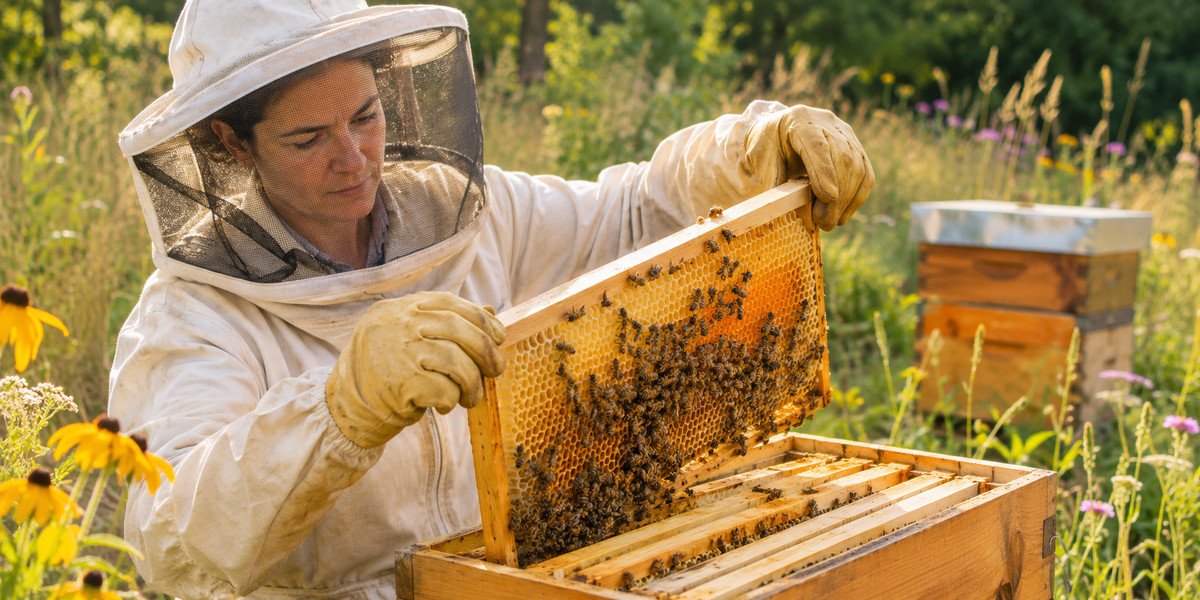
Can you start beekeeping in summer and still raise enough healthy bees before local forage fades? Yes, particularly with a queenright nucleus colony and a realistic plan for the next seasonal shortage. The real deadline is when your colony must have sufficient workers, food, and controlled mite pressure. Use the remaining bloom, not the word summer, to decide whether to start.
In Pennsylvania, major nectar flows can fade by July, while rainfall-driven regions follow different seasonal patterns. Before ordering bees, identify your final dependable nectar flow, the next dearth, and the overwintering target.
A nucleus colony already has brood and comb, while package bees must build both from the beginning. That difference changes how quickly a newcomer can expand and prepare for declining forage. Ask for evidence of recent laying, disease assessment, and measured Varroa levels before accepting summer bees.
Set up water, shade, equipment, feeding supplies, and your first two inspection dates before bees arrive. Then judge whether your colony can establish without depending on an immediate honey harvest. When the remaining season is too short, preparing now and obtaining bees next spring is productive progress.
Jump to a specific section on this article
Can You Start Beekeeping in Summer Where You Live?
Treat early, middle, and late summer as different decisions because usable forage can disappear unexpectedly. Count productive weeks until dearth or winter-bee rearing, not simply days until autumn. Ask a local association when the last dependable nectar flow ends and whether an autumn flow usually follows. Workers need about 21 days from egg to emergence, then roughly three more weeks before becoming foragers.
Early-summer starts favor colonies that can build during an ongoing reliable flow. Mid-summer starts need a specific feeding and mite-check plan when forage becomes unreliable. Late-summer starts need strong adult coverage, drawn comb, and an immediate winter-readiness assessment.
A hot, dry week can stop nectar intake despite frequent flight at the entrance. Long rainy spells can likewise limit flights even when local plants remain in flower. The practical go-or-postpone test is healthy brood, enough forage or feeding support, and time to respond.
Compare your local bloom pattern with what happens across the first beekeeping season before choosing delivery. In cold-winter areas, late-summer winter-bee production makes delayed mite control especially risky. In rainfall-driven climates, assess the next dry season instead of using Northern Hemisphere month names. When the next major dearth is imminent, defer packages unless a mentor confirms adequate support and a workable seasonal plan.
Confirm local registration, movement restrictions, and apiary placement requirements before collecting bees. Confirm your interpretation with a mentor who has observed several recent local seasons. If any essential is missing, prepare now and move installation to the next reliable flow.
Choosing Bees That Can Establish During Summer
For a late-summer beginner, a healthy nucleus with drawn comb usually reduces establishment work compared with a package. Its established brood, food stores, and drawn comb reduce work after installation. Confirm brood-covered frames, food reserves, recent laying, and the mite-sampling method. Compare actual bee coverage with the supplier’s description before accepting the colony.
A package starts without its own drawn brood comb, so its first worker cohort takes longer to arrive. Before laying can expand, workers need usable drawn cells and sufficient nectar or feed. Its eventual population therefore depends heavily on remaining forage and bee longevity.
An established hive can save time but may import brood disease, mites, or poorly managed equipment. Ask for inspection evidence and reject colonies showing suspicious brood, rather than choosing by box size. For warm-weather transport, arrange ventilation and cooler collection times with the supplier. Have the receiving stand, matched frame size, and a secure water source ready beforehand.
Choosing practical equipment for starting a first apiary matters more than buying extra honey supers before bees arrive. Do not accept vague assurances when the seller cannot provide recent queen and mite information. Before installation day, agree on queen release, feeding, and first-inspection dates with the supplier.
While operating a single hive can work, a local mentor becomes especially useful when brood problems arise. Favor the healthiest verifiable colony that fits the remaining forage and your available care.
Brood and Comb in Summer Nucs and Established Colonies
A nucleus usually contains adult bees tending existing brood on drawn comb. That ready nest gives its queen immediate places to lay eggs. Look for eggs, larvae, and capped brood on different frames to assess continuity of laying. Record how many frames have adult coverage, brood, and stores during the handover.
Eggs indicate recent laying, while capped brood may soon contribute new workers.
Capped brood can add workers soon after installation.
Before moving brood frames, check for abnormal larvae, sunken cappings, and unusual odors. Do not trade a healthy small colony for an unhealthy large one. Match the receiving box to the colony’s actual frame format.
Comb and Brood Buildup for Summer Package Bees
Package bees arrive without the drawn brood nest supplied in a nucleus. Workers must build cells before the queen can expand her laying pattern. Even warm conditions cannot produce wax without adequate energy intake and a functioning queen. The original workers age while brood needs about three weeks to emerge as new adults.
Plan the queen-release check according to supplier instructions, before the first detailed brood assessment. Follow supplier guidance for release and the first careful inspection. Keep the nest compact enough for workers to control its environment.
Undrawn foundation during a dearth signals a resource constraint, not necessarily lazy bees. Appropriate feeding can support comb building, although it cannot correct a missing queen. Brood development also requires protein from pollen or suitable alternatives. Review the available pollen before assuming syrup solves every problem.
By weeks three to four, reassess brood emergence, while allowing longer for a meaningful increase in foragers. If the season cannot accommodate that delay, a package is a weaker starting choice. If establishment stalls, investigate the queen and stores before adding more boxes.
Checking Queen Laying After Summer Installation
A summer colony needs a functioning queen to replace aging workers promptly. Newly introduced queens require settling time, so avoid repeated disruptive openings. Record installation day, queen status, and the supplier’s release instructions.
During the first planned inspection, look for eggs, young larvae, and a consistent queen-laid brood pattern. A healthy egg is generally placed singly at the base of a brood cell. Very young larvae also indicate that laying occurred in the recent past. Do not infer a missing queen solely from failing to see her.
For a caged queen, schedule the release check as the supplier instructs during installation week. For the following week, check eggs and young larvae at the interval the supplier recommends. Replacing a queen before verifying release and eggs can waste the colony’s remaining growth window.
If eggs are absent, inspect the food situation and the queen cage history. Look for emergency queen cells and signs of laying workers before deciding on intervention. Photograph suspicious brood for a mentor instead of repeatedly opening the hive. The colony’s brood and food cycle explains why lost laying weeks can undermine the autumn population.
A replacement queen should come from a reliable local source with a known introduction procedure. Around week two, record eggs, young larvae, capped brood, and occupied frames if conditions permit.
Use consecutive inspection notes to decide whether the queen is improving, absent, or failing.
Adding Hive Space Without Slowing Summer Buildup
A young colony regulates temperature and defends its nest more easily when space fits its population. Adding an empty super to a small colony does not accelerate brood or wax production. Keep brood frames together and maintain the arrangement recommended for that hive design. Add room when adult coverage and usable comb show the colony is expanding.
A five-frame nucleus may initially occupy only its transferred frames inside a larger receiving hive. Observe whether bees are occupying and working the adjacent foundation. Do not assume an unused frame becomes useful merely because it is present.
During an active flow, drawn comb can provide laying room without delaying the colony on wax building. During dearth, unsupported foundation may remain untouched for weeks. Around weeks four to six, compare bee-covered frames, brood space, and incoming food before expanding.
A full brood box with strong incoming forage may justify more room. A small colony with vacant brood frames usually needs feeding or diagnosis first. Recheck the distribution of brood, nectar, pollen, and empty laying cells.
Keep inspections short during hot or robber-prone conditions. Expand when bees can use the space, not because the calendar suggests it.
Add space because bees are filling usable comb, never because the calendar reached August.
Feeding a New Summer Colony Through Nectar Dearth
A summer dearth can leave flowering plants visible but producing little nectar. Inspect the amount and placement of food near brood rather than relying on entrance activity. Use enclosed feeding when stores decline and natural nectar cannot support developing brood.
An enclosed feeder reduces syrup exposure to neighboring bees during a dearth. Suitable sugar syrup can support comb drawing during warm conditions when local guidance recommends feeding. Use clean containers and locally recommended mixtures, and avoid fermenting syrup in hot weather. Inspect feeders frequently during heat to prevent leaks, drowning, and souring.
Keep accessible feeders protected so bees cannot drown in open syrup. Stop feeding before honey supers intended for human harvest are installed or filled. Separate brood-support feeding from any future surplus honey production.
Check pollen availability separately because sugar syrup supplies carbohydrates, not brood protein. Scattered brood can indicate queen failure or disease, so do not assume feeding will solve it. Track whether stored food and brood development improve after each feeding adjustment. Watch for fighting or intense searching around the entrance after feeding.
Avoid spills and remove sticky equipment from the vicinity promptly. When plants produce dependable nectar again, taper feeding based on measured stores and new comb. The goal is stable colony development, not simply filling boxes with syrup.
Keeping Water, Shade, and Airflow Suitable for Summer Bees
A reliable shallow water source helps foragers cool the hive and dilute stored food. Install water before the bees arrive so they learn a safe nearby source. Provide stones or floats so foragers have safe landing surfaces.
Morning sun encourages early flight, while local extreme afternoon heat may justify partial shade. Observe midday behavior before adding shade that could leave a cool site permanently damp. Keep the entrance unobstructed and ensure covers fit the hive correctly. Avoid placing the hive where reflected heat builds against solid walls.
A dry, stable stand also protects equipment during sudden summer storms. Bearding alone does not prove that a colony is dangerously overheated. Bearding can be normal in hot weather, so assess ventilation and colony behavior together.
Check airflow, water availability, crowding, and flight activity together. A well-designed, correctly fitted cover matters more than improvised large gaps. Opening wide entrance gaps can increase robbing exposure during low nectar flow. Move inspections to cooler periods when bees are visibly heat-stressed.
Never leave confined bees in a parked car or sealed box during summer transport. If travel is unavoidable, plan short handling times and continuous ventilation. Observe whether normal flight and brood care resume after installation.
Protecting a Newly Installed Summer Colony From Robbing
Robbing can escalate during summer dearth when stronger colonies investigate accessible honey and syrup. A new nucleus often needs an entrance small enough for its population to defend. Start with a reducer compatible with the hive and revise it as bee traffic increases.
Keep spare comb, feed, and exposed honey sealed away from flying bees. Avoid leaving open feeders or wet comb exposed outdoors. Do not conduct long inspections when nectar is scarce and robbers are active. Keep internal feeding enclosed and clean up syrup spills immediately.
Repeated darting approaches and fighting near the entrance can indicate robbing. Inspect from a distance before opening a suspicious hive. Confused flights alone are less convincing than bees wrestling at the opening.
When robbing pressure persists, a correctly fitted robbing screen can complicate access for intruders. Choose any guard or reducer to match the actual entrance dimensions. If robbing begins, close spilled feed sources, stop inspections, and seek experienced help promptly. Seek local assistance before undertaking disruptive rearrangements during an active attack.
Protect the colony’s existing stores while keeping ventilation adequate. Once foraging normalizes, reassess the entrance rather than removing protection automatically.
Managing Varroa Before Summer Bees Become Winter Bees
Varroa mites reproduce in developing brood and transmit viruses that weaken colonies. Ask the supplier for a mite count and sampling date, then obtain your own baseline when practical. Ask for the supplier’s recent sampling and treatment record.
In regions with Varroa, arrange the first measured sample before the autumn winter-bee buildup. A sample of about 300 adult workers gives a basis for mites per 100 bees. For example, six mites in 300 workers equals two mites per 100 bees. Avoid sampling the queen or relying on a casual visual inspection.
Treatment decisions depend on local thresholds, brood status, permitted products, and ambient temperature. The Honey Bee Health Coalition’s varroa management guide describes sampling and treatment decisions for North American colonies. Read current product labels for minimum colony strength, temperature limits, and honey-super restrictions.
A treatment suitable for cool weather may be inappropriate during a heat wave. Do not assume a threshold or registered treatment from another country applies to your apiary. Repeat the same sampling method afterward to verify control rather than assuming treatment succeeded. Watch brood quality and adult population alongside mite measurements.
Coordinate decisions with a local extension specialist when control options differ regionally. Reduce mite burden before long-lived seasonal bees are raised, not after damage becomes visible.
Setting Realistic Honey Harvest Goals for a Summer Start
A first-summer colony should spend most of its resources developing a viable nest. New bees and usable comb are more valuable in year one than a small surplus harvest. A nucleus may expand quickly during strong forage without leaving harvestable excess. Package bees generally need longer because they must establish drawn comb first.
Check whether stores surround brood and how much honey remains after a dearth. Lift and inspect carefully to judge whether the colony is genuinely gaining weight. Keep brood food reserves separate from any proposed harvest.
Set the first-year goal as a strong brood nest and measured food reserves before considering surplus. A strong colony may need everything it collects through the remaining season. Removing surplus too early can create a feeding problem during the next dearth. Honey intended for people should not include sugar syrup stored during feeding.
If a genuine surplus develops, confirm the harvest meets local food-quality rules. A first summer can be successful without extracting any honey at all. Track eggs, brood-covered frames, food stores, and mite counts instead of honey yield alone.
Record whether stores are uncapped nectar or sealed honey before estimating reserves. Do not remove frames that the colony still needs for the next seasonal shortage. Build your first season around survival and learning rather than a fixed yield.
Moving a Summer Colony Toward Winter Readiness
A summer start succeeds when the colony enters the next seasonal transition prepared. At each late-season review, check eggs or brood, adult coverage, stored food, and mite results. Ask your local association for hive-specific winter weights or store targets rather than copying online numbers. Schedule an autumn strength-and-stores review before winter-bee production begins, rather than after local frosts.
If the colony remains weak at that deadline, discuss combining it with a healthy colony. First rule out contagious disease and Varroa problems, then plan queen management with a mentor. Do not transfer suspect brood or comb merely to add population.
Where autumn forage remains strong, use it to finish stores while maintaining monitoring. When cool weather stops liquid feed processing, use only locally appropriate winter feeding options. Match feeding to winter conditions and avoid opening the cluster during severe cold.
Reduce unnecessary empty volume while preserving ventilation and moisture control. Secure lids, maintain a dry stand, and protect against local predators. Create an installation-to-winter record with dates, queen evidence, bee coverage, stores, and mite counts.
Reserve the time needed for regular inspections when planning holidays or other midsummer commitments. Do not wait for the first frost to ask for help with a failing colony. Your target is a defendable, disease-managed colony with sufficient stores, not a honey crop. In mild climates, judge success against the next drought or rainy-season dearth instead.
If those requirements cannot be met, plan a stronger spring start instead.
Frequently Asked Questions about Starting Beekeeping in Summer
Is a Captured Summer Swarm Suitable for a Beginner’s First Hive?
A captured swarm can establish in summer, but its condition and origin are uncertain. Swarming bees may carry mites or pathogens despite appearing vigorous. Beginners should involve an experienced beekeeper and follow local swarm rules. Do not assume that free bees are automatically healthy starter stock.
A swarm lacks established brood in the new hive and must draw comb. Its success depends on queen status, remaining forage, and colony size. Use the same pest monitoring and feeding decisions as other new colonies.
A late swarm faces a narrower runway before declining forage. When a reliable nuc is available, its brood history is easier to examine. Choose the option you can inspect, manage, and legally house.
Are Summer Bee Colonies Cheaper to Buy Than Spring Nucs?
Do not choose a summer colony based on its season alone. Availability and condition matter more than an apparent seasonal bargain. A weak late colony can require substantial feeding and corrective work. Ask about brood coverage, queen status, mite tests, and included frames. Compare health and establishment prospects rather than advertised offers.
How Should I Transport a Newly Purchased Colony in Summer Heat?
Transport a summer colony in a secure, ventilated hive or transport container. Agree on safe closing and collection procedures with the supplier beforehand. Keep the colony upright, shaded from intense sun, and protected from rolling. Never leave confined bees inside a parked, unventilated vehicle.
Travel during cooler hours when your supplier considers conditions suitable. Prepare the receiving stand and equipment before leaving for collection. Open the entrance according to supplier instructions once the hive is settled.
How Long Can I Leave a New Summer Colony While on Vacation?
Avoid a lengthy trip immediately after installing a new summer colony. The first checks confirm queen laying, adequate food, and emerging problems. Arrange for an experienced local beekeeper to inspect when you cannot attend. Prepare specific instructions about feeding, weather, and emergency contacts.
The time needed between checks changes with colony condition and flow. A newly installed package may require closer follow-up than an established nuc. Do not make a rigid absence plan before confirming queen acceptance.
Ask a caretaker to record any entrance fighting or unusual brood signs. Leave sufficient food and a dependable water source before departure. Resume regular inspection and mite monitoring when you return.
What If a Newly Installed Summer Colony Rejects Its Queen?
First verify whether the colony is truly queenless before introducing another queen. A recently released queen may need additional time to begin laying. Check for eggs, young larvae, and the supplier’s queen introduction timeline. Inspect carefully for an existing virgin or unmarked queen. Ask the supplier and a mentor to help interpret the evidence.
Introducing a second queen into a queenright hive often fails. If replacement is warranted, follow a proven local introduction procedure. Protect the limited remaining brood-building time during the correction.
Does Bearding Mean My New Summer Colony Is Overheating?
No, bearding alone does not establish that a colony is overheating. Workers commonly gather outside to relieve congestion or manage nest conditions. Observe water collection, entrance traffic, ventilation, and midday exposure together. Look for broader signs of stress before changing the hive.
Offer dependable water and check whether the entrance remains unobstructed. In harsh climates, suitable afternoon shade may reduce heat loading. Avoid pulling the hive apart during the day’s hottest period.
Excessive empty space is not an automatic cure for heavy bearding. A sudden collapse or dead brood requires immediate local assessment. Continue monitoring rather than reacting to one normal-looking beard.
Record whether the pattern changes after cooler weather arrives.
Why Has My New Summer Colony Stopped Drawing Comb?
Comb building often slows when nectar intake and colony population decline. Check stores, incoming pollen, laying activity, and foundation condition. Only add feed when natural forage is insufficient and feeding is appropriate. If brood or queen performance looks abnormal, investigate before adding equipment.
Can Donated Brood Help a Slow-Growing Summer Colony?
Healthy donated brood can help selected colonies when a skilled beekeeper manages the transfer. First check both colonies for signs of disease and excessive mite pressure. Do not weaken the donor simply to rescue a poor-quality receiver. The receiving colony needs enough nurse bees to cover the added brood.
Brood transfers do not solve an absent queen or chronic food shortage. A mentor can select an appropriate frame and prevent accidental queen transfer. Use this approach only after diagnosing why the colony is lagging.
Is Splitting a Hive in Midsummer a Practical Way to Start Beekeeping?
A midsummer split can work when the donor colony is strong and forage remains. Every split reduces the resources available to its parent colony. A new unit needs a viable queen, food, and enough adult bees. Late splits in cold climates have little time to build winter populations.
Confirm queen arrangements and local disease status before moving frames. Monitor both donor and split for mites rather than assuming either is clean. Be cautious about making splits from a colony already losing weight.
A well-prepared nuc from a responsible supplier may be more predictable. Plan a split around remaining brood cycles, not convenience alone. Ask a local mentor to assess whether the donor can spare resources.
What Can I Prepare in Summer If I Postpone Buying Bees Until Spring?
Summer is an excellent time to prepare equipment, legal permissions, and apiary access. Visit local beekeepers to understand the next season’s nectar and dearth pattern. Choose a site with manageable flight paths and dependable water. Practice lifting and fitting empty hive components before bees arrive.
Inspect sample frames with a mentor to recognize healthy brood. Learn a repeatable mite monitoring procedure before your first installation. Confirm a reliable supplier’s ordering and collection process.
Prepare a notebook for queen, food, and health observations. Keep the equipment clean, dry, and protected until delivery. A postponed installation can be a well-informed decision rather than a lost season.
Start next spring with a site and management plan already tested.
What to Remember About Starting Beekeeping in Summer
Yes, you can start beekeeping in summer when a healthy queenright colony has time to build before local forage declines. For an early or mid-summer opening, favor a verified nucleus and schedule checks through its first worker cycle. At a late-summer start, prioritize existing comb, food reserves, measured Varroa, and an achievable winter plan. If those conditions are missing, prepare equipment and mentoring now, then install bees during the next reliable flow.