
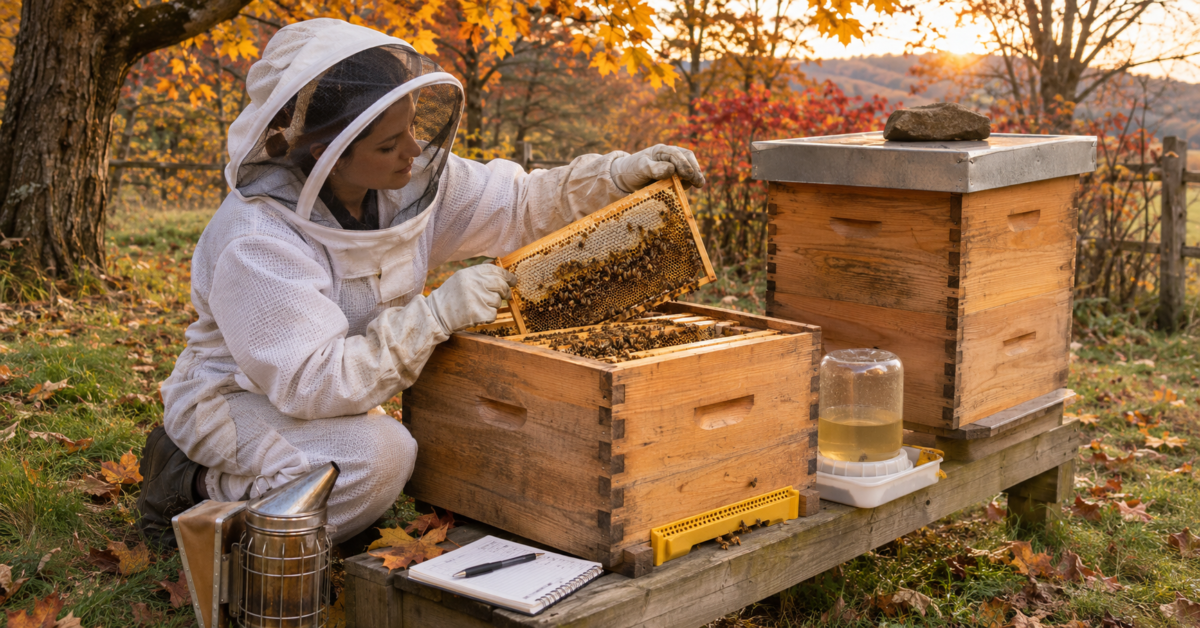
Can you start beekeeping in the fall when neighboring hives are already preparing for colder weather? Yes, but a strong established colony has a better chance than newly installed packages in most cold-winter regions. The deciding factors are local forage, a productive queen, healthy bees, adequate stores, and enough remaining warm days. A late purchase without those essentials can turn ordinary winter preparation into an urgent rescue.
Fall also means different things in humid coastal areas, northern interiors, and regions with winter rainfall. A calendar date alone cannot tell you whether bees can still build comb and raise brood.
Before collecting bees, request the colony’s occupied-frame count, recent mite results, and a realistic food inventory. Compare those observations with regional wintering expectations, not general assurances that the hive looks healthy. Confirm that you can complete feeding and any necessary treatment before sustained cold stops practical hive work.
This guide explains how to judge a fall start instead of assuming every autumn colony will survive. It separates steps a beginner can complete quickly from biological work that takes weeks. When the remaining season is too short, planning now and installing bees in spring is usually wiser.
Jump to a specific section on this article
Can You Start Beekeeping in the Fall? How Local Weather Decides
Cold-region beekeepers often begin winter preparation in August or September, before autumn weather arrives. A newly purchased colony needs usable flying days to settle, store feed, and adjust its brood nest. In mild or winter-rainfall climates, blooming forage may support activity later in the calendar year. Confirm the local forage pattern and expected first prolonged cold spell before arranging delivery.
Daily highs matter, but wind, rain, and short daylight can still prevent useful foraging. Workers need flight opportunities after a hive move to learn the new entrance location. Several warm afternoons are more helpful than one unusually hot day.
A colony can cluster during cool spells and resume work during a warm interval. That flexibility does not replace weeks needed to raise future adult workers. Feeding also becomes less useful when syrup chills and bees stop collecting it.
Compare the likely first hard freeze with the colony’s current brood and stored food. Ask experienced local beekeepers when they normally finish feeding and major hive rearrangements. Those practical deadlines reveal whether a new colony has enough preparation time. For a broader seasonal baseline, first-season colony changes explain why autumn work differs from spring growth.
Southern and Mediterranean climates may have winter forage rather than continuous winter dormancy. Such colonies still face weather disruption, pests, and periods when incoming nectar stops. Treat regional experience as essential evidence before committing to a late installation.
Choosing Bees for a Fall Beekeeping Start
Compare bee offers by adult coverage, drawn comb, queen evidence, stored food, and mite records. An established healthy hive may be ready sooner than a new package lacking usable comb. A nucleus can overwinter when its population and winter housing suit the region. Reject a late package if remaining forage and weather cannot support substantial comb and brood development.
A package without drawn comb must construct storage and brood cells while its new population develops. That work consumes resources just as late-season nectar availability may decline. A verified, queenright colony already holding food and brood reduces those immediate establishment demands.
Before paying for bees, request recent mite-monitoring records and any treatment details. A clear record is more useful than a general claim that the colony appears healthy. Ask whether the queen was observed laying and whether brood patterns look appropriate. The broader first-year beekeeping plan also helps coordinate supplier timing with equipment and local support.
Transport the colony with adequate ventilation, securely closed equipment, and a short practical route. Move bees when the seller recommends conditions suitable for the colony and container. Have the prepared stand, water, and space ready before departure.
Do not buy an unidentified swarm simply because it appears large in September. Unknown queen status, stores, health, and age structure make winter readiness difficult to judge.
Checking Colony Strength Before a Fall Start
For freezing climates, University of Florida guidance describes roughly 25,000 to 30,000 adults as an overwintering population scale. Its guidance warns that colonies below about 15,000 adults may struggle in freezing conditions. These figures are regional population estimates, not fixed occupied-frame counts for every hive configuration.
During suitable weather, record the number of frames densely covered with bees on both sides. Count open and capped brood separately to assess future emerging workers as well as current adults. Interpret irregular brood against the season, queen history, and possible disease rather than assuming a failed queen. Compare the findings with wintering expectations for the same hive format in your climate.
Do not assume every scattered brood cell means an immediate queen failure. Workers may reduce rearing as forage declines and nights become colder. An experienced mentor can help distinguish ordinary seasonal contraction from abnormal brood.
Estimate whether the colony can defend its entrance and occupy the available equipment. Excess empty boxes are difficult for a small population to guard from pests. A compact, well-occupied brood area often suits a late-season colony better than unused expansion space. Learning how colony workers organize brood and food makes these inspections easier to interpret.
During short inspections, the VIVO BEE-V001L Large Stainless Steel Beehive Smoker offers a shielded canister for controlled smoke. Use minimal smoke and keep the hot equipment away from dry vegetation.
When strength or queen status remains uncertain, arrange a second inspection with an experienced local beekeeper.
Confirming a Laying Queen in a Fall Bee Colony
Finding the queen herself is helpful but not required when fresh eggs show recent laying. Look carefully for single eggs near the center of suitable brood cells. Check several neighboring cells before reaching a conclusion about the laying pattern. A queen can be difficult to spot in a crowded or unsettled colony.
Eggs usually hatch around three days after laying, so fresh eggs provide evidence of recent queen activity.
An apparent absence of eggs needs careful interpretation during seasonal brood reduction.
If the seller reports a recent requeening, ask when the replacement queen began laying. Avoid opening the hive repeatedly during cold periods simply to search for her. When evidence conflicts, seek a mentor’s judgment before attempting a late queen replacement.
Brood and Winter Bee Development in a Fall Colony
Worker brood takes about three weeks to develop from an egg into an emerging adult. Those workers still need time to mature before carrying out some colony tasks. Late-season brood therefore reflects preparation already underway rather than bees instantly available today. Healthy nurse bees and adequate food are essential for producing the next cohort.
In temperate climates, many long-lived winter workers develop during late summer and autumn. Their physiology differs from short-lived summer foragers because they must persist through scarcity. Heavy mite pressure during their development can undermine the colony before winter arrives.
A hive full of capped brood may look promising while its adult population remains thin. Judge emerging brood alongside the number of workers currently keeping that brood warm. Freshly emerged workers do not immediately replace experienced foragers or defensive bees. Avoid expanding the brood chamber based on brood counts alone.
The balance between workers, brood, food, and disease matters more than a single frame count. Where brood is already declining, a new colony has less time to replace missing adults. That is why strong September colonies generally outperform weak late purchases in cold regions.
Drawn Comb and Hive Space for a New Fall Colony
Drawn comb gives bees usable cells immediately for brood rearing and food storage. Frames containing only foundation require workers to produce wax before those cells exist. Wax production draws on energy and usually proceeds best during active resource flows. A late nucleus on bare foundation may struggle to store enough winter food.
Ask the seller how many frames are already drawn and suitable for continued use. Inspect comb for obvious damage, heavy debris, and signs requiring disease assessment. Never transfer suspect comb between colonies without appropriate health guidance.
Match the hive body to the number of frames bees can actively cover. Too much empty space can make inspections and defense harder for a small colony. Reduce unused capacity rather than adding a super out of habit.
A compatible drawn frame from a healthy, well-managed source can save building time. Keep frame dimensions and hive systems consistent to avoid gaps and crushed bees. Do not move brood or comb from a diseased colony into a new purchase.
Remove any queen excluder before cold-weather clustering if it could strand the queen below rising workers. Keep food above and beside the brood area while preserving open worker cells for remaining laying.
Before closing, confirm frames sit correctly and entrances remain unobstructed.
Building Food Stores in a New Fall Bee Colony
For cold northern regions, University of Florida guidance describes approximately 90 pounds (41 kilograms) of winter honey reserves. Alabama Cooperative Extension instead gives about 60 pounds (27 kilograms) for its regional feeding guidance. These figures concern stored food, not total hive weight or a universal target for small nucleus colonies.
Distinguish the weight of stored food from boxes, frames, bees, and any feeder when assessing reserves. Use consistent hefting or scale readings to follow changes after feeding and during winter. Check that food sits above or beside the cluster, since heavy frames elsewhere may be inaccessible in freezing weather. Compare the measured condition against local targets before counting a colony as winter-ready.
When feeding is appropriate, a concentrated autumn syrup commonly uses two parts white sugar to one part water by volume. Oregon State Extension advises switching from liquid feed below approximately 57°F (14°C) daytime temperatures. Other guidance uses around 50°F (10°C), so choose the earlier safe cutoff for local conditions.
Choose an internal feeder that fits securely and can be checked without spilling. Keep the entrance manageable while feeding, particularly during a nectar shortage. During careful closure, a 14-inch Little Giant BKBR14 Beekeeping Brush can move lingering bees away from frame edges. Its gentle role is preventing bees from being trapped, not removing all workers from comb.
Where liquid syrup cannot be processed, accessible solid emergency feed may help a low-store colony. Emergency sugar cannot replace a healthy winter workforce or timely Varroa management. Record the feeding method and remaining stores to guide the next safe check.
Managing Varroa Before a Fall Colony Enters Winter
Varroa destructor mites reproduce in developing brood and can transmit damaging honey bee viruses. A colony purchased late in the year may already have accumulated harmful mite levels. Do not judge infestation by looking only for visible mites on adult bees.
Request the seller’s recent mite count, sampling method, date, and any treatment history. If an inspection is safe, obtain a new measurement using a validated local protocol. For the latest control choices, the Honey Bee Health Coalition’s varroa management resources explain monitoring and treatment decisions. The appropriate action depends on measured infestation, colony phase, climate, and treatment restrictions.
For a standard 300-worker-bee wash, keep the queen clear of the sample from the brood area. Six mites indicate about 2% infestation, while nine indicate about 3% in that sample. During autumn population decline, readings near 2-3% commonly warrant prompt action under regional guidance.
Treatment options have different temperature limits, brood constraints, and label requirements. Some work poorly when abundant capped brood shields reproducing mites from exposure. Use only registered products according to their current local labels and protective requirements. Retest when the method and conditions allow, because treatment success cannot be assumed.
Varroa control is most useful before developing winter workers suffer prolonged mite and virus exposure. A lower count after late treatment cannot restore already damaged bees. Ask a seller for dated monitoring and treatment records rather than accepting an unmeasured claim of low mites.
Protecting a New Fall Colony From Robbing
Robbing becomes more likely when nectar declines and neighboring colonies search for exposed food. A weak new colony may be especially vulnerable to stronger foragers entering its hive. Watch for frantic fighting, bees searching seams, and unusual activity around entrances.
Avoid spilling syrup on hive surfaces or leaving open feed near the apiary. Use enclosed feeders designed to keep bees inside their own equipment. Reduce the entrance enough for the colony to defend it without blocking normal airflow. Fit reducers to the specific bottom board rather than assuming every hive has identical dimensions.
Move slowly during inspections and keep exposed food frames covered between checks. If robbing begins, close the hive promptly and follow locally tested control practices. Do not leave an open comb outside as a distraction for robber bees.
Wasps and other insects can exploit the same openings during a seasonal dearth. Check loose lids, warped wooden joints, and gaps beside poorly seated frames. A screen can change entrance access while preserving airflow when properly installed. Keep the colony’s access to water reliable so reduced flying does not add stress.
Persistent robbing can damage a colony already short of adult defenders. Ask a mentor to assess repeated attacks rather than repeatedly opening the nest.
Preparing a Fall Hive for Wind and Moisture
Place the hive on a stable stand above standing water and seasonal flooding. Use straps or appropriate weights where strong winds could dislodge covers. Keep the entrance clear of vegetation, drifting debris, and future snow accumulation.
Cold-weather preparation begins with a sound lid and equipment that fits together properly. Condensation above clustered bees becomes a problem when liquid water drips onto the nest. Regional ventilation and insulation recommendations differ because winter humidity and temperature patterns vary. Ask local overwintering beekeepers how they manage moisture without creating strong drafts.
Do not completely seal a hive simply to make it feel warmer. Bees still need an entrance and an appropriate route for moisture to escape. For mice or other winter pests, use a suitable entrance guard when locally necessary.
Short autumn inspections still call for practical protection from defensive workers. The Mann Lake ProVent Beekeeping Jacket (Large) includes a self-supporting veil that should remain clear of your face. Check fit carefully because one manufacturer’s large size cannot be assumed to suit everyone.
Reduce wind exposure without putting the hive where winter sunshine never reaches it. A sound roof and dry stand matter more than decorative wrapping alone.
Monitoring a Fall Colony as Temperatures Drop
Once cold weather begins, avoid lifting brood frames without a clear management purpose. Frequent disruptions can break the cluster and expose brood during marginal temperatures. Instead, monitor entrance activity during suitable weather and compare hive weight over time. A lack of flights on a cold day does not by itself show colony failure.
Log each inspection date, occupied frames, brood stages, food observations, mite sample size, and resulting count. Record treatment and feeding dates separately, including any follow-up measurements. This history reveals whether the colony is improving before cold weather eliminates corrective options.
Heft a hive from the same side each time, or use a suitable scale. Consistent technique makes weight trends more interpretable than occasional guesses from different positions. If food runs short, choose a locally appropriate emergency feeding method. Do not open the hive simply to check food when safer indirect assessments suffice.
Expect a winter cluster to change position as bees consume reachable stores. Unusually prolonged warm periods can increase activity and alter consumption. Your seasonal beekeeping workload shifts from lengthy inspections toward brief monitoring and preparation.
Observe entrances after storms for snow, dead bees, or other obstructions. A small amount of debris can be ordinary, but blocked ventilation needs attention. Arrange timely help if the colony shows repeated distress or rapid weight loss.
When to Delay a Beekeeping Start Until Spring
Postpone a fall purchase when the queen is unconfirmed or the colony’s mite status remains unknown. Also wait when a colony lacks sufficient workers, drawn comb, or accessible winter food for its climate. A package needing major comb construction is especially vulnerable when little reliable forage remains. Treat any unresolved essential condition as a reason to seek a stronger colony or start in spring.
| Fall-start readiness check | Evidence to request | Ready to proceed when | Delay or correct when |
|---|---|---|---|
| Local season deadline | Check the first prolonged cold spell, local forage, and remaining feeding and mite-treatment windows. | Required work can finish while bees can still process feed and treatments are permitted. | Prolonged cold is near or essential work cannot finish: wait for spring. |
| Laying queen and brood | Confirm fresh eggs or a credible recent laying record; inspect brood for disease signs. | Queen status is established, and the brood pattern fits the season. | Queen status or brood health remains uncertain: obtain an expert inspection before buying. |
| Adult bee coverage | Record densely covered frame faces, current brood, hive size, and the inspection date. | Population meets your local overwintering standard for this hive configuration. | Only isolated seams of bees remain, with no time for recovery: postpone. |
| Varroa evidence | Ask for a dated adult-bee wash result, sample size, treatment dates, and a follow-up count. | A recent result meets the local autumn action threshold after appropriate control. | At 9 mites in 300 sampled bees (3%), NC State Extension recommends autumn control; unverified results need testing. |
| Food stores and placement | Estimate stored honey or syrup separately from hive weight; check food above and beside the cluster. | The accessible reserve meets the local target for the colony and equipment. | Stores are short and feeding cannot be completed before cold: delay or seek urgent local guidance. |
| Drawn comb and hive space | Count clean drawn frames, bare foundation, and boxes the bees actually occupy. | There are usable cells for brood and food without excessive empty space. | Mostly bare foundation and little remaining forage: choose an established colony or wait. |
| Winter worker development | Compare healthy adult coverage, brood stages, and parasite records before the season closes. | Winter-bound workers are already developing in a healthy, adequately fed colony. | Weak adults, failing brood, or unmanaged mites leave insufficient recovery time: defer the purchase. |
| Wind, moisture, and defense | Inspect the stand, roof, drainage, entrance, equipment gaps, and signs of robbing. | The hive can stay dry, stable, ventilated, and defended in local conditions. | A leaking cover, insecure stand, or active robbing must be corrected before delivery. |
| Transport and local support | Verify movement rules, required health documentation, a prepared stand, and an experienced contact. | Permissions, safe transport, and first-inspection support are arranged before arrival. | Missing permissions, equipment, or competent help: prepare now and buy later. |
Use autumn to arrange a legal site, a water supply, and stable hive stands. Confirm applicable apiary registration or inspection requirements with the responsible local authority. Order suitable bees through a reliable supplier when spring availability becomes clear.
Practice assembling compatible boxes, frames, feeders, and protective gear before bees arrive. Take a course or accompany a mentor during safe seasonal inspections. Plan a monitoring routine that starts soon after installation rather than after trouble appears.
Some beginners prefer one colony, while two can provide useful comparisons and backup resources. The practical one-hive starting trade-offs help you match colony count to skills and space. Either arrangement still requires careful mite checks and ongoing seasonal management.
Proceed this fall only after checking queen activity, healthy adult coverage, food placement, and recent Varroa results. Confirm those observations meet local wintering expectations for the actual hive and seasonal conditions. Verify that required feeding, equipment adjustments, and labeled treatments can finish before prolonged cold. If several essentials still need rebuilding, postpone rather than assuming favorable weather will rescue the colony.
Begin next spring with documented equipment, local support, and a realistic colony management schedule.
Frequently Asked Questions about Starting Beekeeping in the Fall
Can I start beekeeping in the fall with a captured swarm?
A captured autumn swarm is usually a risky foundation for wintering in a cold climate. It may lack drawn comb, adequate stores, and a reliably mated queen. Its apparent size does not reveal its mite load or future brood production. Ask an experienced beekeeper to evaluate the swarm before attempting any installation.
In a mild region, an early fall swarm might establish when forage and warm weather persist. Even then, it needs a secure hive and a documented health plan. Do not combine it with a healthy colony without assessing disease and parasite risks.
Avoid assuming the swarm originated from a known healthy apiary. Confirm local rules for collecting swarms and relocating bees. Postpone a first hive when you cannot provide immediate evaluation and support.
Can a nucleus colony survive winter if purchased in the fall?
A strong fall nucleus can overwinter when enough workers cover its occupied comb and stores remain accessible. Cornell’s cold-climate guidance describes about eight deep frames’ equivalent of honey for overwintering nuclei. It also describes two stacked five-frame boxes, placing stores above a cluster that moves upward more readily. Those details describe one cold-climate configuration, not a universal requirement for every nuc size. Verify the actual hive arrangement, colony condition, and local wintering method before delivery.
When should I transport a purchased bee colony to its fall location?
Move the colony while weather and daylight still allow it to settle before prolonged cold. Arrange an agreed collection time with the supplier based on bee activity and transport conditions. Secure equipment and maintain ventilation because closed colonies can overheat in transit. Have the destination stand prepared so bees spend minimal time confined.
After installation, give the colony a suitable period to orient to its new entrance. Avoid immediately opening the brood nest unless an urgent condition requires attention. Follow the seller’s advice on securing entrances and handling long-distance moves.
Should a beginner start with one fall bee colony or two?
Two healthy colonies can offer comparisons, but doubling weak late-season purchases does not improve their winter readiness. One strong colony is preferable to two neglected or inadequately prepared hives. A mentor may help evaluate whether the second colony provides useful biological backup. Choose the number your available time and local conditions can genuinely support.
Each hive needs its own food assessment, mite sample, and secure equipment. Shared management schedules do not mean both colonies will need identical interventions. Record observations separately to avoid confusing healthy and struggling colonies.
A second hive can help reveal which changes are seasonal rather than exceptional. However, moving brood between colonies can spread pathogens if disease is not recognized. Never use weak or diseased colonies as routine donors for another hive.
Can I harvest honey from a bee colony bought in the fall?
Usually, leave the fall colony’s food stores intact rather than planning an immediate honey harvest. Winter survival depends partly on a reserve that remains accessible during periods without forage. The correct amount varies with climate and hive management. Only remove a true surplus after meeting a locally informed winter reserve target. A colony purchased late may still need feeding despite appearing heavy.
Inspect honey placement as well as the total stores present. Do not confuse a full super with enough food beside the winter cluster. Record any removed frames so later weight changes remain understandable.
What should I do if my new fall bee colony loses its queen?
First confirm the suspected queen loss rather than deciding from one eggless frame. Late-season brood reduction can temporarily resemble queen failure. Check recent eggs, brood patterns, and queen evidence during suitable inspection weather. Ask a mentor or supplier to evaluate findings before introducing replacement stock.
A purchased mated queen may be difficult to obtain late in the season. A colony also needs enough workers and suitable conditions to accept her. Do not rely on emergency queen rearing when mating weather and drones are scarce.
Combining a truly queenless colony with a healthy unit is sometimes considered locally. Screen both colonies for disease before any combination decision. Discuss technique and timing with an experienced beekeeper rather than improvising during cold weather.
When no practical correction is available, record the problem and plan a safer spring restart.
Why has my newly installed fall colony stopped taking sugar syrup?
Cool temperatures, full storage cells, or a blocked feeder can explain declining autumn syrup uptake. Below daytime temperatures around 50-57°F (10-14°C), liquid feeding becomes increasingly unreliable under common extension guidance. Check feeder cleanliness and existing stores without unnecessarily disturbing a cold cluster. When food is genuinely short, use a locally appropriate solid emergency option rather than repeatedly offering chilled syrup.
Can I keep a new fall beehive inside a garage during winter?
A standard occupied hive should not simply be placed in an ordinary closed garage for winter. Bees need appropriate ventilation, controlled conditions, and safe opportunities for cleansing flights. A poorly ventilated indoor space can trap moisture and create unsafe conditions. Specialized indoor wintering systems require dedicated equipment and experienced management.
For beginners, a secure outdoor site with locally appropriate winter protection is usually more practical. Keep entrances unobstructed and avoid exposing the colony to exhaust fumes or chemicals. Discuss unusual microclimates with a local beekeeper before changing the overwintering location.
Do I need to register a bee colony purchased in the fall?
Registration or inspection requirements depend on the state, province, municipality, and country where the hive sits. Some jurisdictions require apiary registration even for a single hobby colony. Others regulate movement, health certification, or local setbacks separately. Check the responsible agricultural or apiary authority before delivery.
Ask whether seasonal deadlines apply or whether registration begins when bees arrive. Keep supplier information and transport records available for any required inspection. Do not assume registration rules disappear because the purchase happens late in the year.
If bees cross a state or national border, movement rules may be more demanding. Confirm health documentation before arranging transport rather than after the colony is loaded. Local associations can help identify the right agency, but official requirements govern.
What can I prepare in fall if I wait until spring to buy bees?
Use autumn to settle hive placement, water access, permissions, and equipment compatibility. Observe sunlight, drainage, prevailing winds, and winter access at the chosen site. Arrange mentor support before your first live inspection. Read basic colony biology so eggs, brood, food, and adult-worker behavior become familiar.
Assemble and level equipment without leaving food or used comb exposed to pests. Check that frames, boxes, feeders, and protective clothing fit their intended roles. Plan a spring delivery date around local forage and supplier advice.
Create a simple inspection record for brood observations, mite counts, feeding, and weather. Ask a local association when beginners can attend supervised apiary visits. Prepare to verify queen status and forage conditions shortly after bees are installed.
Starting with sound preparation in spring is often safer than rescuing a weak late-autumn purchase.
What to Remember About Starting Beekeeping in the Fall
Yes, fall beekeeping is viable when a strong queenright colony already meets regional population, food, and mite-control needs. Before purchase, check occupied comb, accessible stores, recent parasite sampling, and enough suitable weather for final preparation. An unestablished package needing extensive comb and brood growth rarely offers the same margin in freezing climates.
Ask a local beekeeper to check those conditions against your climate and hive format before delivery. If any critical requirement cannot be met before prolonged cold, prepare now and acquire healthier bees in spring.