
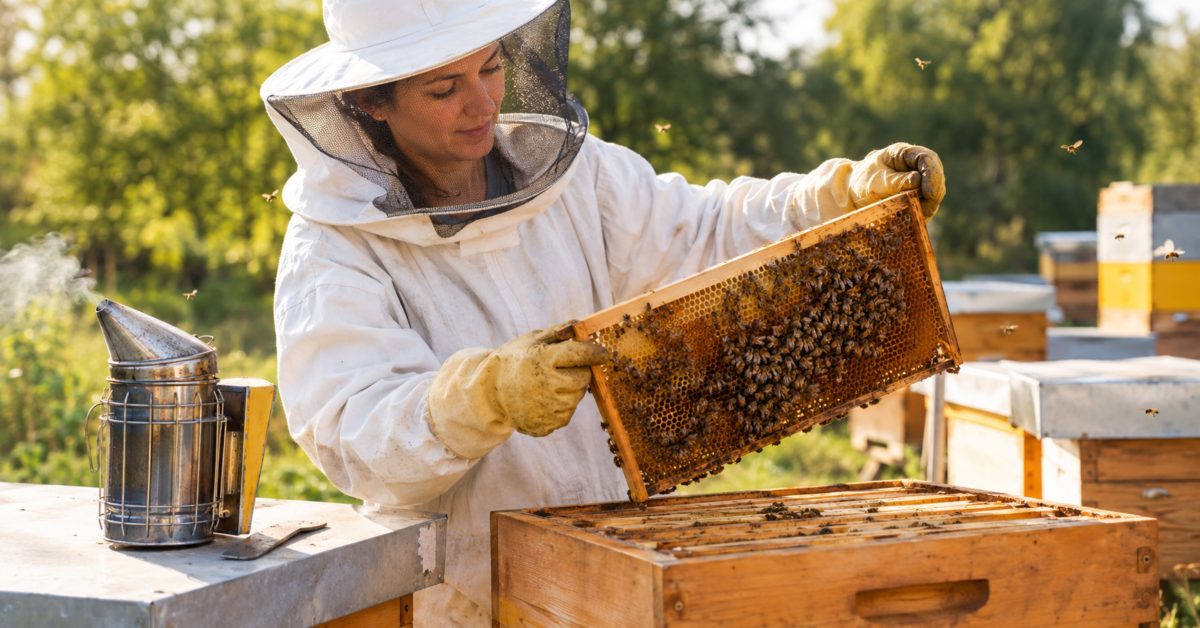
How many beehives should a beginner start with when learning to manage colonies independently? Two colonies are a practical choice if you have room, reliable time, and equipment for each. One is better when your schedule, site, or local rules limit regular care. Three or more can complicate the first season before inspections and mite monitoring become familiar.
With two colonies, you can compare brood, food stores, and growth under similar local conditions. Those differences can reveal useful questions sooner, although each colony still requires its own careful assessment.
Two hives do not provide a safety net against inadequate mite control or shared forage shortages. Even helpful brood transfers require healthy donor colonies and a clear reason for intervention. Choose a starting number that leaves enough time to respond when either colony needs additional care.
One hive topped with two honey supers still contains a single colony rather than three separate beehives. A second occupied hive needs its own brood nest, entrance, and essential equipment. Plan around independently managed colonies, not the number of boxes stacked in your yard.
Jump to a specific section on this article
Contents
Why Two Beehives Are a Practical Beginner Starting Point
Two colonies offer a comparison that one colony cannot provide during routine inspections. A sparse brood pattern looks more concerning when the neighboring colony has strong, even brood. Differences can prompt better questions, although a contrast alone never establishes a diagnosis. Beginners should record both observations before deciding whether either colony needs intervention.
One colony may develop rapidly while the other builds slowly after installation. That contrast encourages you to examine queen performance, nutrition, and mite levels separately. Similar weather does not mean two colonies will develop at identical speeds.
North Carolina State Extension recommends two full hives for first-time beekeepers because comparison improves learning. Cornell’s beekeeping basics guidance likewise describes two colonies as a useful starting point for new keepers. Their recommendations assume that both colonies receive proper attention and disease management.
Compatible frames can sometimes help a struggling colony when an experienced beekeeper identifies a suitable transfer. Move brood or food only after checking that the donor is healthy and strong enough. Never transfer suspect comb between colonies when disease could spread with the material. Ask a local mentor before attempting a brood transfer to address queenlessness.
Two hives also create two sets of records for learning seasonal patterns. Neither hive should become the automatic standard against which every observation is judged. Treat comparison as a prompt for inspection, not proof that one colony is failing.
| Beginner colony count | Choose this when | Practical advantage | Readiness check before proceeding |
|---|---|---|---|
| One colony | You can maintain one complete inspection routine, with local support for questions. | Simpler hands-on practice with brood checks, mite monitoring, and frame handling. | Arrange a mentor or club contact because you lack a second colony for comparison. |
| Two colonies | You have safe space, complete equipment for each hive, and time to inspect both. | Compare brood development and food stores under similar conditions. | Monitor mites and stores separately; do not share suspect comb or equipment. |
| Three or more colonies | Your established colonies already have reliable health records and manageable seasonal care. | Broader opportunities to compare distinct colonies and manage growth. | Delay expansion if existing colonies still need frequent corrective visits or resources are limited. |
When Starting With One Beehive Is the Better Choice
One colony is sensible when your available inspection time is already narrow. A newcomer can practice lighting a smoker, opening boxes, and returning frames carefully. That learning still requires timely health checks rather than occasional casual visits. If regular access is unreliable, postpone acquiring bees instead of relying on a smaller colony count.
A single hive also limits the immediate handling and equipment load. You will still need protective clothing, a smoker, and tools appropriate for your hive. Keep spare basic equipment available for predictable repairs and colony expansion.
Consider your local support network before settling on one colony. A nearby mentor may help interpret brood problems when you lack a second colony for comparison. Before committing to a second colony, weigh the trade-offs of starting beekeeping with one hive against your available help. Building that support matters more than acquiring a second hive that you cannot maintain.
One hive cannot provide an internal source of healthy brood during an emergency. An experienced beekeeper or local club may help you find appropriate assistance. Plan where you will obtain replacement queens or another nucleus colony if needed.
Choose one colony deliberately rather than treating it as a temporary failure. Expand only after routine inspection, mite monitoring, and seasonal preparation become consistent.
Why Three or More Colonies Can Overwhelm a New Beekeeper
Each additional colony creates another independent health history and inspection obligation. A third hive can require attention exactly when the first two need urgent work. Managing several colonies well demands more than repeating the same inspection motion.
Problems rarely arrive in a convenient sequence across an apiary. A nectar dearth may affect every colony while their remaining stores differ. Swarm preparations and queen issues may also overlap during a busy season. You must keep enough time for follow-up visits rather than only initial inspections.
More colonies also increase the likelihood of handling heavier stacks and spare equipment. A beginner should practice safe lifting before expanding the number of occupied hives. Additional boxes do not reduce the need to monitor the bees inside them.
Separate inspections must document each colony’s queen status, brood pattern, stores, and mite results. Errors become easier when boxes, feeders, and records are not clearly labeled. Newcomers can reduce early beekeeping challenges by matching their colony count to established handling skills. Give yourself room to learn controlled handling before accepting more colonies.
Extension recommendations differ on the number a novice can manage comfortably. Your training, seasonal workload, and available help should determine whether expansion is realistic.
Spend your first season learning to recognize queen cells, measure mite levels, and handle brood frames confidently.
Estimate Inspection Time for Two Beginner Beehives
Reserve enough uninterrupted time for both colonies rather than estimating from hive-opening time alone. Mississippi State University Extension describes extensive brood inspections as taking 15 to 20 minutes per colony. Allow additional setup time for the Foxhound Bee Company Stainless Steel Bee Smoker (Standard Size), tool cleaning, and dated records. Unexpected queen problems, changing weather, or heavily propolized frames can extend visits and require follow-up.
At that published inspection rate, two brood checks take roughly 30 to 40 minutes before preparation or cleanup. During active spring growth, many beginners inspect about weekly to track brood development and crowding. Local conditions and your mentor’s guidance should determine how often opening either colony is useful.
Write a specific inspection question for each hive before lifting the cover, such as whether laying space is sufficient. Check eggs or young larvae, brood condition, food stores, available space, and signs of swarming. Reserve separate time for planned mite sampling because visual impressions cannot measure infestation.
Tracking how much time beekeeping takes also captures equipment preparation, feeding decisions, and return visits outside inspections. Reserve extra time during swarm season and before major seasonal weather changes. Record your actual visit lengths for a month, then adjust the workload estimate.
Finish each colony’s notes before starting the next inspection. This reduces the risk of mixing up observations or repeating unnecessary interventions.
If two complete inspection sessions consistently exceed your available time, begin with a single colony.
Plan Equipment for One Versus Two Beehives
Two colonies need two complete living spaces, not merely a second empty box. Each must have its own appropriate floor, brood equipment, frames, cover, and entrance arrangement. Match all components to the hive design and frame size you intend to maintain.
Some handling tools can serve both hives when used and cleaned appropriately. A functioning smoker and hive tool are shared essentials, not substitutes for separate colony equipment. Keep enough spare frames and boxes to respond when either colony expands. Do not assume a starter bundle includes every component required for two independent colonies.
For matching ten-frame Langstroth equipment, inspect dimensions against the Hoover Hives HH10-2D1M 10-Frame Beehive Kit (2 Deep, 1 Medium) before ordering replacements. That configuration equips one hive, not two independently managed colonies. Deep and medium frames differ in size, so check fit before moving components.
Feeding needs must be assessed separately for each colony and its stores. Choose feeders that fit the specific hive and can be maintained hygienically. When disease is suspected, stop any movement of used equipment between colonies. Label each hive’s parts so equipment history remains clear during later inspections.
Consider storage for clean equipment before any bees arrive at the apiary. Protect unused woodenware and frames from moisture, rodents, and wax moths when relevant. Practical capacity includes spare components, not only the visible occupied hives.
Assess Backyard Space for Two Starter Colonies
Two occupied hives need safe working clearance even when their footprints appear compact. Plan room for removing covers, placing boxes, and stepping away without blocking an exit. Keep the working area firm, accessible, and free of obstacles.
Check where normal bee flight crosses paths, neighboring gathering spaces, and the area immediately beyond each entrance. A suitable water source can reduce interest in pools and outdoor taps. Fences or hedges may help redirect flight upward when local rules allow them. Check whether either colony would interfere with children, pets, or routine household access.
Do not calculate capacity from the hive boxes’ dimensions alone. The beekeeper’s movement, flight paths, and nearby property use shape practical placement. A confined corner may remain unsuitable even when two boxes physically fit.
Local sunlight, drainage, wind, and summer heat should influence the final arrangement. Avoid sites that flood after rain or expose colonies to repeated disturbance. Plan a stable stand and consider how you will move full boxes safely. Separate entrances visually when practical to help reduce bees drifting between neighboring colonies.
Before installing bees, walk the property as a neighbor or visitor would. Consider how the arrangement changes when people use nearby outdoor areas. If safe access cannot be maintained, choose another site or fewer colonies.
Check Forage Conditions Before Choosing Hive Numbers
Two colonies gather nectar and pollen from the wider landscape, not just your garden. Local blooms may appear plentiful while providing little during a later seasonal gap. Observe vegetation across the neighborhood and ask experienced beekeepers about local nectar flows.
Flowering trees, wild plants, crops, and gardens may contribute at different times. Weather can shorten a nectar flow even when flowers are present. Colony stores and actual incoming forage matter more than the apparent number of blossoms. Do not assume that adding a hive doubles the amount of forage available nearby.
Competition also depends on other managed colonies and wild pollinators using the area. Foraging ranges vary with conditions, so property lines do not define a colony’s food supply. Ask local mentors whether nearby apiaries experience recurring summer or winter shortages.
Inspect stored food when forage conditions change rather than feeding by habit alone. Keep suitable feeding equipment ready when your region’s guidance calls for supplementation. Avoid open feeding that can encourage robbing and disease transmission. Healthy brood growth requires more than access to visible flowers.
Start with fewer colonies when recurring forage shortages already strain established local hives. Revisit the decision after observing one full seasonal cycle.
Assess Seasonal Nectar Gaps for Two Colonies
Spring growth can create strong demand for food before a dependable nectar flow begins. Summer droughts may interrupt flowering even in otherwise productive locations. Late-season blooms can finish before colonies have adequate winter stores. Review local seasonal records instead of assuming the same calendar works everywhere.
Food availability must be checked inside each colony rather than inferred from its neighbor.
Strong forager traffic does not necessarily show that sufficient nectar is being stored.
Compare stored honey and pollen with the colony’s brood and population needs. Discuss seasonal feeding thresholds with a mentor familiar with your climate. Record the timing of shortages so next year’s colony decision uses observed evidence.
Consider Nearby Apiaries Sharing the Same Forage
Other apiaries can add substantial demand to the same surrounding flowers. Their presence does not automatically prove that a location is overstocked. Available forage depends on land use, season, rainfall, and competing colony strength. Ask local associations about the area before assuming an exact hive capacity.
Large numbers of colonies may intensify competition during poor nectar flows. Nearby colonies can also influence disease and drifting management questions. Keep observations tied to local conditions rather than arbitrary distance rules.
A new colony may use a different part of the landscape than its neighbor. Flight patterns change as food sources appear or disappear. Regular inspections reveal whether stores are improving or being consumed. Respond to actual colony condition rather than broad assumptions about competition.
Planting suitable forage can help, but a small garden rarely supplies every colony need. Use locally appropriate flowering species and avoid exposing bees to pesticide applications. Maintain a clean, accessible water source throughout warm and active foraging weather.
Check Local Rules Before Setting Your Hive Limit
Local law may restrict hive numbers even where your yard has ample space. Municipal ordinances can also govern property setbacks, registration, and required barriers. Check the rules for your exact address before buying bees.
Start with municipal or county authorities rather than relying on an online national summary. Some jurisdictions require apiary registration or permits before colony installation. Private rental agreements and neighborhood rules may impose additional restrictions. Rules can differ sharply between neighboring towns or county areas.
Ask which office administers registration, inspections, and complaints about managed bees. Keep any approval documents and renewal dates with your apiary records. A local club can explain common procedures but cannot replace official requirements.
Plan emergency access for neighbors and property managers where relevant. Consider whether an entrance orientation or flyover screen is required. Do not install a second colony merely because another beekeeper nearby has one.
If rules limit you to one colony, treat that limit as decisive. When permission is uncertain, resolve it before purchasing bees or equipment.
Plan for Colony Losses Without Overexpanding
Colony losses can follow interacting stresses involving Varroa mites, disease, nutrition, queen problems, and weather. Two colonies experiencing the same forage shortage may decline together despite different initial strengths. Varroa infestations can become damaging before a colony looks obviously weak. Make mite monitoring part of the care plan for each colony from installation onward.
When using the Mann Lake Varroa EasyCheck DC671, follow the sampling instructions and record each colony’s mite counts. Its marked basket accommodates approximate samples of 200 or 300 bees, so record the chosen sample size. Follow regional treatment guidance and product labels, then verify the post-treatment result.
Consider how a colony failure would affect your learning plan rather than chasing a target count. Observing the first beekeeping season can help you prepare for normal changes and difficult setbacks. Strong winter preparation starts well before temperatures become consistently cold. A surviving colony still needs care even when another colony has died.
Do not transfer comb from a failed colony until its condition has been assessed. Some diseases require specialized handling or official advice before equipment is reused. Contact a qualified local inspector when signs suggest a serious brood disease.
Keep clean spare equipment available for unexpected needs instead of treating extra live colonies as insurance. After a loss, review mite readings, brood records, nutrition, and weather before obtaining replacement bees. Clean or dispose of suspect equipment according to the diagnosis and local disease-control guidance.
Decide When You Are Ready for a Third Beehive
Add a third colony only after you can explain the condition of your first two. You should have current records of brood, food stores, temperament, and mite monitoring. Routine inspections should finish without repeated confusion over boxes or colony identity. Successful colony growth alone does not prove that your workload can expand safely.
Choose a planned season for adding bees rather than reacting to an unexpected offer. Check forage, local permissions, and the available working area again. Confirm that you can obtain appropriate equipment before the new colony arrives.
Your first two colonies may still need feeding, swarm control, or queen assessment. A third colony multiplies follow-up decisions during these busy periods. Mentor availability matters when several colonies develop problems simultaneously.
Use what you learned from starting a first apiary to identify gaps before expanding. Replace damaged equipment and organize records while colony numbers remain small. Create a clear response plan for mites, queen loss, and seasonal food shortages.
Wait when one existing colony requires sustained corrective management. A stable inspection routine matters more than a fixed date on the calendar. Ask an experienced beekeeper to review your handling and records. Expand gradually only when the new colony can receive the same standard of care.
If your first two colonies still need frequent corrective work, stabilize their management before adding another.
Frequently Asked Questions About How Many Beehives a Beginner Should Start With
Should Beginners Start With Nucleus Colonies or Packages?
A locally sourced nucleus colony usually gives a beginner drawn comb, brood, bees, and an established queen. A package begins with a cluster of bees and a caged queen, requiring the colony to build comb and establish brood. Choose a supplier who explains inspection history, queen status, and local delivery timing. Ask about Varroa monitoring before installation rather than assuming either format is free of mites.
A nucleus colony may develop faster because brood and comb are already present. A package offers a different starting process and can work with appropriate care. The better fit depends on season, available equipment, supplier quality, and your local mentor’s guidance.
Confirm the frame count and frame dimensions before ordering a nucleus colony. Plan how you will transfer frames into compatible equipment. Avoid buying two different formats unless you understand their distinct early management needs.
Can Two Beginner Beehives Use Different Hive Designs?
Yes, but matching designs usually make beginner management simpler. Compatible frames allow easier equipment planning and possible health-checked transfers. Different designs can require separate tools, dimensions, and inspection techniques. Choose a design you can obtain replacement parts for locally. Learn one system well before adding a second configuration for comparison.
Should Both Starter Colonies Come From the Same Supplier?
Using one reputable local supplier can simplify collection timing and equipment compatibility. Separate suppliers may offer different queen stock or delivery schedules. Neither arrangement guarantees healthy bees or equal development. Ask each seller about recent colony inspections and disease management.
Inspect both colonies independently after installation and document what you actually observe. Record supplier details and queen introductions separately for future reference. Do not infer the health of one colony from the reputation of the other.
Do Two Beehives Need Separate Feeding Equipment?
Each colony needs a suitable way to receive supplemental feed when feeding is justified. Sharing one feeder between colonies can create sanitation and timing problems. Match each feeder to its hive design and the colony’s current needs. Clean equipment carefully and avoid spilling feed around entrances.
Use closed feeding arrangements where practical to discourage robbing. A feeder’s capacity does not indicate how much a particular colony should receive. Follow local seasonal feeding advice and observe actual stores.
Remove or adjust feeders when feeding is no longer appropriate. Avoid carrying suspect equipment between colonies when disease is possible. Record feeding dates and observations for each hive independently.
How Can I Reduce Drifting Between Nearby Beehives?
Give neighboring hive entrances distinct visual landmarks and clear approaches. Different entrance directions or colors can help foragers identify their home location. Avoid arranging identical entrances in an uninterrupted straight line when space permits. Keep landing areas unobstructed and watch for unusual congestion after moving hives. Some drifting can still occur between colonies despite thoughtful entrance positioning.
Record where each colony stands before relocating equipment. Move hives thoughtfully and follow experienced local advice for substantial relocations. Do not interpret drifting alone as evidence that a colony has lost its queen.
What If One of My First Two Beehives Becomes Queenless?
Confirm queenlessness before taking action, since a temporarily unseen queen may still be present. Look for recent eggs, brood age, queen cells, and the colony’s recent history. Ask a mentor to help distinguish a truly queenless colony from a brood break. A poorly timed intervention can damage a colony that is already requeening.
Healthy brood from another compatible colony may sometimes support a diagnostic or corrective plan. Never transfer material when disease is suspected or when the donor cannot spare it. A purchased mated queen is another option when timing and local conditions favor introduction.
Check supplier instructions and local guidance before introducing a replacement queen. Follow up after the appropriate interval to confirm laying has resumed. Document what you observed instead of recording only that a queen was not found.
Act on evidence of colony condition rather than one unsuccessful queen sighting.
Do Beginners Need Spare Hive Boxes Before Bees Arrive?
Keep compatible spare space available so expanding colonies are not delayed by supply shortages. The exact number of boxes depends on hive format, colony strength, and season. Check that the boxes fit your existing frames and covers. Store spare equipment clean, dry, and protected from pests.
Can a Beginner Manage Two Beehives Without a Mentor?
Two colonies can be managed without a dedicated mentor, but reliable local support is valuable. Classes and association meetings provide opportunities to practice inspection and ask specific questions. Find assistance before a queen problem or brood disease requires an urgent decision. Use extension guidance to compare observations with established management methods.
Record photographs and dated inspection notes when seeking a second opinion. Avoid making major colony transfers or treatment changes from uncertain online diagnoses. A knowledgeable local beekeeper can help interpret seasonal conditions unfamiliar to beginners.
What Records Should I Keep for My First Two Colonies?
Give each colony a permanent identifier and maintain a separate dated inspection history. Record visible brood stages, queen evidence, temperament, stores, and available space. Include mite sampling methods, numerical results, and subsequent treatment observations. Note weather and forage conditions that may explain short-term changes.
An inspection record should distinguish observations from your interpretation of them. For instance, missing eggs and not seeing a queen are different findings. Photographs can support later comparisons when they show the relevant frame clearly.
Record the source and installation date of each colony. Keep any feeding, equipment movement, and queen replacement history together. Review both records before deciding whether the apiary is ready to grow.
Can Beginners Expect Honey From Two Hives in the First Year?
Do not plan a first-year honey harvest as a required outcome. Young colonies may need their stored food to build comb and prepare for winter. Local nectar flow, installation timing, and colony strength shape any surplus. Assess remaining food reserves carefully before considering any potential honey harvest.
Two colonies do not guarantee twice the honey of one colony. One may invest more resources in brood or comb during the first season. Experienced local beekeepers can help define suitable reserve levels for your climate.
A weak colony should not lose essential food stores to a harvest. Monitor forage changes and colony condition rather than selecting a fixed harvest date. Do not treat equipment capacity as proof that harvestable honey is present.
Prioritize healthy colonies and adequate seasonal stores over a first-year yield target.
The Main Points to Keep in Mind About How Many Beehives a Beginner Should Start With
For most beginners with safe placement, adequate time, and dependable support, two beehives make a useful starting point. Choose one when legal permission, working space, or inspection capacity makes a second colony impractical. Add a third only after your first two have stable management routines and documented health checks. Before obtaining bees, confirm local requirements, compatible equipment, and a realistic Varroa monitoring plan.